https://www.infirmiere-canadienne.com/blogs/ic-contenu/2026/09/28/transformer-la-compassion-en-innovation
My message to nurses everywhere: your innovations matter, your insights are fundable, and your voice shapes the future of health care
 istockphoto.com/FatCamera
Nurses’ insights, informed by lived experience and relational understanding, are essential for designing solutions that are both human-centred and sustainable.
I stood in front of four “sharks” — all physicians — as the only nurse among the finalists at Canada’s first Critical Care Innovation Shock Tank. My hands weren’t shaking because I doubted my idea. They were shaking because I was about to ask them to value something nurses do every day but innovation spaces rarely reward: human connection.
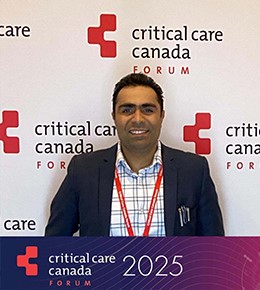 Courtesy of Viksit Bali
“The ICU Human Library wasn’t a technological gadget or a new clinical protocol — it was about creating a platform for storytelling, reflection, and psychological safety, where staff could learn from each other’s experiences and build empathy, understanding, and team cohesion,” Viksit Bali says.
Out of all the submissions, both nationally and internationally, my concept — the ICU Human Library* — was selected as one of four finalists: two from Canada and two international. I was the sole nurse finalist in a room of physician-led teams.
I won, securing $5,000 in seed funding to pilot the ICU Human Library.
What is the ICU Human Library?
The ICU Human Library functions as a digital repository where staff can anonymously record 3–5 minute audio reflections about challenging cases, ethical dilemmas, or moments of breakthrough. Audio recordings are submitted through a coded portal without identifying information, and measures to further strengthen anonymity are being refined. Colleagues can browse by theme — moral distress, family communication, end-of-life care, team dynamics — and listen during breaks, commutes, or quiet moments on night shifts.
Similar to StoryCorps but designed specifically for health-care teams, it creates a searchable library of peer wisdom. Unlike structured debriefing or Schwartz Rounds, which are time-bound and facilitated, the ICU Human Library is on-demand and peer-created. Staff access it when they need it — during night shifts, after difficult cases, or when seeking guidance on familiar challenges. It’s asynchronous peer support, available 24/7.
Entering the room
The atmosphere at the Critical Care Canada Forum (CCCF) Shock Tank 2025 was electric. The panel of four judges — Canadian and international critical care leaders — evaluated each pitch with precision. Presenters at the event delivered polished, data-heavy business cases, emphasizing scalability and return on investment.
My challenge was different: I had to present a human-centred idea, rooted in direct-care nursing experience, in a space where success is typically measured in metrics and efficiency. The ICU Human Library wasn’t a technological gadget or a new clinical protocol — it was about creating a platform for storytelling, reflection, and psychological safety, where staff could learn from each other’s experiences and build empathy, understanding, and team cohesion.
Translating nursing work into innovation language
The panel responded positively when I framed the initiative in terms of measurable outcomes: increased staff engagement, enhanced psychological safety, and potential improvements in team communication. I connected emotional labour to retention rates and team resilience. One judge later told me, “You made us see that what happens in the space between clinical tasks is just as important as the tasks themselves.”
But what was harder to convey were the intangibles: How does a story about a nurse holding a dying patient’s hand while simultaneously coaching a terrified family translate to return on investment? How do you quantify the moment when a new grad hears a senior colleague describe surviving their own first code and realizes they’re not alone?
I learned to translate without diluting. I used terms like “psychological safety” and “team resilience” — language that resonates in innovation spaces — while keeping the human element central. During the pitch, I led with a 30-second narrative about a nurse supporting a colleague through moral distress, then showed engagement metrics from our peer recognition pilot. Story opened the door; data kept it open.
When judges questioned sustainability, I confidently cited nursing research on peer support interventions and burnout prevention. I acknowledged existing models like Schwartz Rounds and narrative medicine programs, then clearly articulated what makes the ICU Human Library unique: it’s asynchronous, peer-driven, anonymous, and accessible 24/7.
What winning meant
Winning as the sole nurse wasn’t just personal validation — it was institutional recognition that nursing-led innovation belongs at the table. The judges explicitly noted that the ICU Human Library addressed a gap that traditional clinical interventions miss: the emotional and moral dimensions of critical care work.
One judge commented: “This is the kind of innovation we need more of — it’s not flashy, but it will actually change how teams function.”
The $5,000 seed funding enables my team to build the digital infrastructure, pilot the concept with staff engagement tracking, and generate the evidence needed to scale the project. More importantly, it sends a message to nurses everywhere: your innovations matter, your insights are fundable, and your voice shapes the future of health care.
Lessons about nursing and innovation
Being the sole nurse finalist underscored a broader truth: nurses bring a unique perspective to health-care innovation. Nurses operate at the intersection of patient care, family support, and system processes. We witness successes and failures that no single metric can fully capture. Our insights, informed by lived experience and relational understanding, are essential for designing solutions that are both human-centred and sustainable.
The win demonstrates that when nurses have access to innovation spaces, we don’t just participate — we lead. The ICU Human Library wasn’t just competitive; it was selected as the most impactful solution precisely because it addresses the human dimensions that other innovations overlook.
Moving forward: from pitch to pilot
Following the success at the Shock Tank, the project has moved into a vital strategic planning phase. Supported by the funding, I am currently collaborating with a seasoned ICU physician and former chief of staff to design a robust six-month pilot for Toronto Western Hospital’s medical-surgical and neuro ICU. Our goal is to formalize a framework that will rigorously test feasibility and measure the platform’s impact on psychological safety and team communication. While the launch is underway, the current focus is on building a high-level evidence base that can eventually support the project’s expansion into a national model for nurse-led peer support.
For nurses ready to innovate
Before pitching your idea:
- Frame your idea relationally and operationally: Connect emotional labour to measurable outcomes like retention, psychological safety, and team cohesion.
- Know your differentiators: Research what already exists and clearly articulate your unique contribution.
- Find your allies early: Connect with innovation offices, quality improvement teams, or nursing research departments.
- Build on evidence: Ground your idea in existing research.
During the pitch:
- Lead with story, support with data: Open with a narrative that captures human impact, then show metrics.
- Translate without diluting: Use terms like “psychological safety” while keeping the human element central.
- Own your expertise: Confidently cite nursing research.
- Anticipate objections: Prepare for questions about sustainability, scalability, and measurement.
The Critical Care Canada Forum will host Shock Tank again in November 2026. Nursing-led innovations belong in these spaces. If you have an idea that addresses unmet needs in your unit, pitch it. Your insights from the bedside are innovations waiting to happen.
Conclusion
This experience affirmed that nursing-led innovation is not peripheral; it is foundational. The ICU Human Library is proof that when we bring our whole selves — our clinical expertise, our emotional intelligence, our insights — to innovation spaces, we don’t just compete. We win.
* Human Library is a registered trademark of the Human Library Organization, founded in Copenhagen, Denmark, in 2000. For more information, visit humanlibrary.org.
Viksit Bali, RN, BN, MHA, is an advanced practice nurse educator at Toronto Western Hospital, University Health Network, and a consultant with PBA Canada.
#career
#leadership
#nurses-health-and-well-being
#workplace-safety
#professional-development