infirmiere-canadienne.com/blogs/ic-contenu/2026/06/29/qui-a-sa-place-en-soins-infirmiers/
Whether whispered or shouted, the message is clear: your presence may be tolerated, but your truths are not
By Vanessa Van Bewer
June 29, 2026
 istockphoto.com/Sean Anthony Eddy
More than ever, students are speaking up and naming discrimination in the classroom, posting on social media, and reporting harmful experiences to faculty. Unfortunately, many continue to face punishment for their honesty, their courage, and their refusal to stay silent.
I’ve been working in nursing education for more than a decade, and if there’s one thing I’ve learned, it’s that our systems are good at saying the right things — diversity, inclusion, reconciliation — but far less skilled at doing the hard work of structural change.
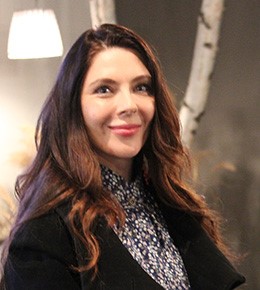 Courtesy of Vanessa Van Bewer
“We need real accountability. We need to track who is failing, who is being excluded, and who is quietly disappearing from our programs. And we need to act on that data,” Vanessa Van Bewer says.
Over the past three years, I led a project called Mapping Racial Disparities in Nursing Education alongside an incredible team of students, community members, and scholars. Together, we examined how racism, inequity, and narrow notions of professionalism shape students’ experiences of undergraduate nursing education. Our study was participatory and inclusive, involving 11 undergraduate and graduate student researchers — Indigenous (First Nations and Métis), Black (African and international), and Asian Canadian — working alongside Indigenous Elder Leslie Spillett. We collected both quantitative data via a survey of 280 students and qualitative data through sharing circles, which were facilitated by Dr. Moneca Sinclaire, with 33 learners across racial, cultural, linguistic, disability, and gender identities. What emerged was nuanced and, at times, deeply uncomfortable.
Where do I even start? Half of the students in our study experienced failure at least once in nursing education. For many, failure occurred during high-stakes, skills-based assessments and demonstrations. Racialized women were seven times more likely to fail than White men.
We found that discrimination wasn’t just present, it was patterned. Some of the most nuanced findings came from the intersections of race, place of origin, and socioeconomic status. For example, racialized students, born in Africa, who are financially insecure experience compounded discrimination.
It would be tempting to assume that students who hold “marginalized identities” face more discrimination, but that’s not always the case. Women whose first language was English, for instance, reported more discrimination than women for whom English was an additional language. Yet among men, the pattern reversed. Perhaps for women, having English as an additional language offers some kind of buffering or mediating effect that it does not for men. There are no neat conclusions. The reality is that inequity is woven through the fabric of nursing education in ways that defy simple explanations.
More than ever, students are speaking up and naming discrimination in the classroom, posting on social media, and reporting harmful experiences to faculty. Unfortunately, many continue to face punishment for their honesty, their courage, and their refusal to stay silent. Sometimes the response is subtle: a lowered grade, exclusion from opportunities, being labelled “unprofessional.” Other times, it is not subtle at all. Students have been failed, sanctioned, even debarred. Many of these students identify as BIPOC (Black, Indigenous and people of colour) — the very “diversity” we claim to welcome in nursing education. Whether whispered or shouted, the message is clear: your presence may be tolerated, but your truths are not.
As a result, many students learn to stay quiet. They sense that raising concerns or showing emotion could be used against them. To survive, they shrink parts of themselves. They contort their appearance, their accents, their dress, and their tone to fit the image of the “good nurse” we continue to reward.
Yet, we also heard powerful stories of resilience and resistance. Black students found solidarity in one another. Indigenous students drew strength from culturally grounded mentorship and teachings. Filipino students found affirmation in their collective presence and community. These stories remind us that nursing schools are changing — but not always because of institutional design. Often, these shifts are emerging organically, as students find ways to care for one another and push back against harmful policies and educator practices. Change is happening, but in many cases it is being led by students and not by the systems meant to support them.
So what now?
We need real accountability. We need to track who is failing, who is being excluded, and who is quietly disappearing from our programs. And we need to act on that data. We must rethink what counts in admissions and evaluations, especially in clinical settings where professionalism and Whiteness are deeply intertwined. And we need to stop pretending that equity can be addressed through a single guest lecture, cultural safety workshop, or annual training module. This is long-term, relational work, and it belongs to all of us.
The road into nursing is already steep and uneven, marked by long hours, clinical demands, and emotional labour. The weight of expectation students carry is heavy enough. We don’t need to line their path with more barriers. We must clear the way — removing the burdens of racism, exclusion, and enforced silence — so students can move forward with strength, purpose, and pride.
Vanessa Van Bewer, RN, PhD, is a Red River Métis storyteller, scholar, and assistant professor in the College of Nursing at the University of Manitoba.
#opinions
#education
#equity-social-justice
#nursing-education
#racism
#recruitment-and-retention