https://www.infirmiere-canadienne.com/blogs/ic-contenu/2026/07/27/adria-brochu-conquerir-le-monde
Former Canadian Armed Forces nurse Adria Brochu says ‘anything is possible’ as she overcomes visible and invisible disabilities
By Laura Eggertson
July 27, 2026
 Courtesy of Adria Brochu
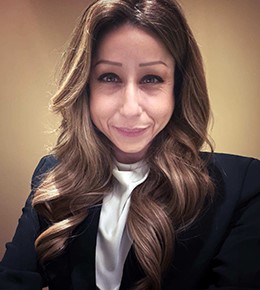
A retired Canadian Armed Forces nurse, Adria Brochu now devotes her time to adaptive sport, volunteering, and supporting fellow veterans as she navigates life with chronic illness. “I have a very busy and full life,” Brochu says.
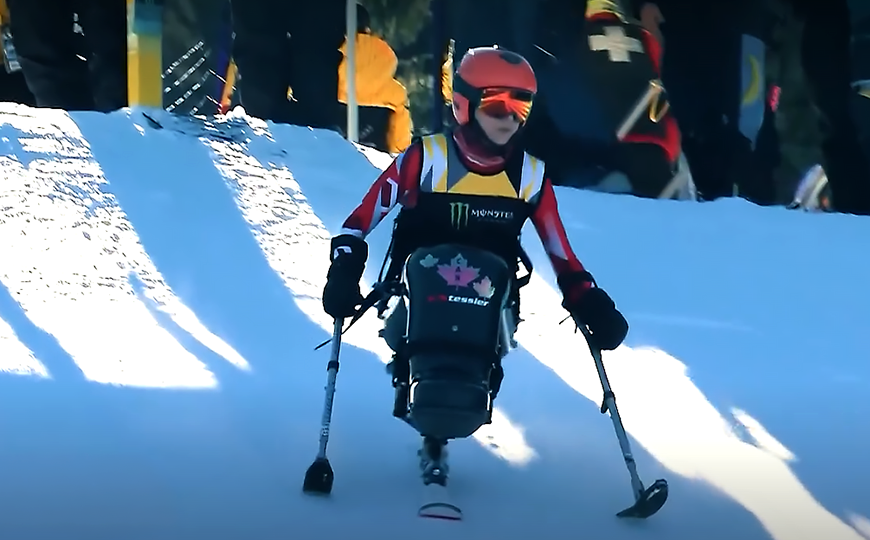
As Adria Brochu stared down at the crowd of well-wishers gathered at the base of Whistler Mountain to cheer her on at the Invictus Games, she focused on just one goal.
 Courtesy of Adria Brochu
In November 2025, the Canadian Armed Forces recognized Adria Brochu’s commitment, resilience, and teamwork through its Soldier On program.
Finish.
It was February 12, 2025, and the retired Canadian Armed Forces nurse’s 50th time on snow.
Pushing out of the gate, Brochu slalomed confidently around the red and yellow flags marking the course for the women’s intermediate-advanced sit ski race.
With powerful thrusts of her outriggers, she sliced across the finish line, powdery snow flying as she skidded to a flashy hockey stop and earned a silver medal.
Thrusting one arm into the air in triumph, Brochu grinned ear-to-ear.
“It was such a relief to have made it to that day,” she remembers. “When I crossed that finish line it wasn’t just the racecourse finish line, it was a life finish line.”
Participating in the Invictus Games marked the culmination of a lifetime of overcoming visible and invisible disabilities, says Brochu.
After enduring childhood trauma and years of declining neurological function, Brochu was recently diagnosed with an inherited disorder called Ehlers-Danlos syndrome. The syndrome weakens connective tissue and can cause joint pain and neurological symptoms.
Brochu now uses a wheelchair and requires a feeding tube, making careful planning and packing necessary for trips like the one to Vancouver and Whistler.
Team Canada flagbearer
For a year, Brochu trained as a member of Team Canada, where she was particularly pleased to have nurses Kate Shields and Melissa Norris as teammates. She competed in sit skiing, volleyball and rowing at the international Games that Prince Harry founded in 2014 for wounded, sick and injured veterans and military personnel.
At the opening ceremonies, Brochu carried Team Canada’s flag.
Brochu had pushed herself to the point of exhaustion and travelled from her home in Calgary for the event. She surmounted setbacks including a virus that sidelined her for the first few days of the Games and left her worried she would be unable to ski.
But on the morning of her race, under bluebird skies, she felt no nerves — only an adrenalin-fuelled thrill that propelled her down the mountain and across the finish line.
“I felt so energized that day, I felt like I could take on the world,” Brochu says.
Taking on the world — or at least the effects of natural disasters — has been a theme in Brochu’s life and career.
In January 2005, the nurse was a member of the Canadian Armed Forces Disaster Assistance Response Team (DART) that Canada deployed to Sri Lanka to help victims of the deadliest tsunami in history, which followed an earthquake underneath the Indian Ocean.
Deployed post-tsunami
Brochu was the clinical manager for a small sub-team airlifted into Ampara, one of the hardest-hit regions in the Southeast Asian country.
“They dropped me and my crew off in the hardest hit area, right on the beach,” she recalls. “When we looked around, it was all just rubble and chaos.”
As gunshots sounded in the distance from civil unrest, Brochu and her six colleagues set up camp on the beach and a makeshift clinic in a partially destroyed concrete building with intact pillars and walls.
There, for two months, she practised “bare bones” nursing, she says. She had to think on her feet, problem solve, pivot quickly to improvise treatments that used the basic equipment and supplies the team had, and push past language barriers and differences in customs to make patients comfortable.
Brochu and her colleagues treated wounds and infections of people injured in the tsunami, as well as those with lung issues and chronic illnesses that the disaster’s destruction of homes, sanitation, and social systems exacerbated.
The needs of the people she was treating were overwhelming, Brochu says. Although she has blocked many details from her memory, she cannot forget the body of a child who washed up on the beach.
The hopelessness in the eyes of an older woman wasting away on the cement floor of her family’s shelter because she had lost the use of her legs also remain with the nurse.
“What hit me the most was how helpless people were and how desperate people were — the inequity of it,” she says. “It was just a massive amount of suffering.”
Although Brochu felt powerless to do enough, before she and her team left the area, she took the only portable wheelchair from their kit and gave it to the woman on the floor.
After Brochu lifted her patient into it, the woman’s eyes lit up as her family pushed her outside into the sun for the first time in years.
“It lessened the burden on her family as well,” Brochu says.
Untreated PTSD
That small ability to improve her patient’s life heartened Brochu. But her experience in Sri Lanka, combined with military sexual trauma, left her with post-traumatic stress disorder (PTSD). At the time, she did not even have words to describe the experience.
In 2008, she secured a medical release and retired from the military as a lieutenant, moving from CFB Petawawa back to Alberta, where she had grown up.
For the next few years, Brochu tried to resume her nursing career, but the trauma and PTSD she experienced made nursing impossible.
“I loved being a nurse, so I struggled for many years after that. I felt very lost,” she says.
She also struggled with eating and substance-use disorders as she coped with the loss of her military role and military family.
Finally, after years of misdiagnoses, in 2017 Brochu began receiving trauma therapy at an occupational stress therapy clinic in Edmonton.
“I learned that PTSD is something I will live with for the rest of my life and that therapy has given me the tools I need to manage it myself now and to still be successful,” she says.
Today, at 47, Brochu stays positive despite the progressive weakness Ehlers-Danlos delivers to her muscles as their collagen breaks down. She uses her nursing skills to volunteer at a recreational therapy program with children at the Alberta Children’s Hospital, playing adaptive sports and crafting with them.
“The kids are my greatest teachers, the way they can persist, and how resilient they are,” Brochu says.
Volunteers with veterans
She is also involved in helping other veterans learn to ski, is an active member of the Calgary chapter of the Canadian Adaptive Snowsports Association, and plays wheelchair basketball and curling.
In November 2025, the Canadian Armed Forces recognized Brochu’s commitment, resilience, and teamwork through its Soldier On program. The Forces flew Brochu to Ottawa to present her with its Unconquered Award at a ceremony at the Canadian War Museum.
It was a full-circle moment for Brochu, who had left the military feeling unsupported, with her PTSD unrecognized.
Today, the friends she has made through the Invictus Games and by participating in veterans’ sporting organizations have expanded her circle of support from half-a-dozen people to a thousand, she says.
She no longer feels afraid of the future, even though she does not know how her illness will progress, and she has good and bad days.
“My biggest message is just resilience — anything is possible,” she says. “I’m just grateful I live independently and I have a very busy and full life. I’m lucky compared to some people.”
Laura Eggertson is a freelance journalist based in Wolfville, N.S.
#profiles
#military-nursing
#mental-health
#chronic-illness
#nurses-health-and-well-being