https://www.infirmiere-canadienne.com/blogs/ic-contenu/2026/01/19/vous-envisagez-de-travailler-dans-un-camp
What to look for, what to ask, how to prepare, and how to find an opportunity that’s right for you
By Stacey Contenti
January 19, 2026
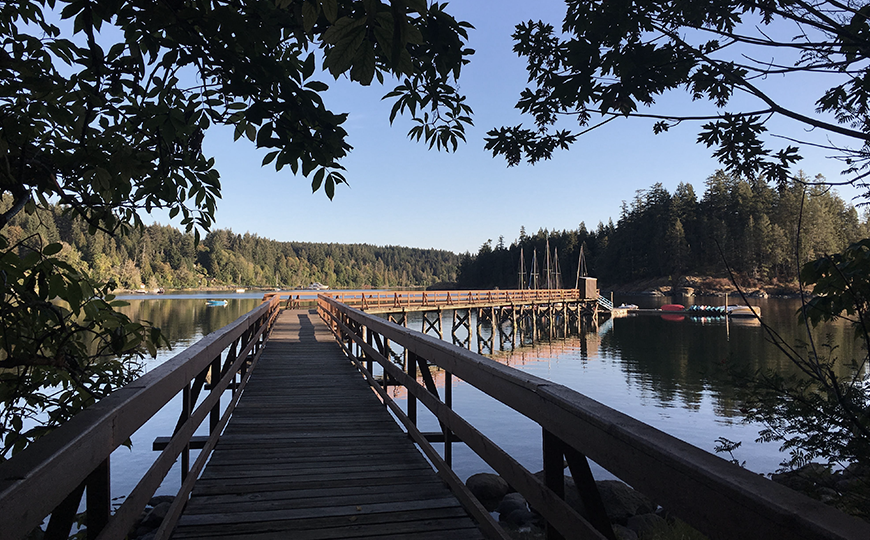 Courtesy of Stacey Contenti
Camp nursing is an excellent opportunity if you are looking for a way to give back through volunteer work while experiencing new things.
Camp nursing is a specialized area of nursing for which nurses provide medical care and support to staff and campers in overnight, day, sports or special needs camp settings. In many cases, camp nursing occurs during the summer months, although there are also opportunities for nurses to serve in off-season camps. Camp nurses address medical concerns, administer medications, provide first-aid and emergency care, communicate with parents, and document health-related interactions.
 Courtesy of Stacey Contenti
“As a camp nurse, you are entrusted with the health and well-being of everyone on the camp property. This is a significant responsibility, but it also speaks to the trust and respect that the camp places in your nursing knowledge and skills,” Stacey Contenti says.
Camp nursing is an excellent opportunity if you are looking for a way to give back through volunteer work while experiencing new things. Over the past 29 years as a nurse, I volunteered for 16 summers and worked full time in a camp nurse role for more than three years. When I started my camp nurse journey, I had no idea what to ask about or look for. I have learned a lot about being a camp nurse over the years and can help you know what to look for, what to ask, how to prepare, and how to find a camp nurse opportunity.
What to expect
Camp nursing occurs in a variety of settings. Depending on your preferences, clinical experience, and camping personality, you may choose to work in a rural, urban, wilderness, or semi-remote setting. In my experience, most summer camps are non-profit or charitable organizations, although there are also for-profit camps. The only apparent difference is the available funds for honorariums, salaries, facilities, and medical supplies. My experience has been in the non-profit sector in both wilderness and semi-remote settings in Alberta and British Columbia.
The camp nurse role often involves extended hours and frequent requests from those you care for. If camp nursing is new to you, I recommend starting with one or two weeks to get a feel for the demands of the job. As a camp nurse, you are entrusted with the health and well-being of everyone on the camp property. This is a significant responsibility, but it also speaks to the trust and respect that the camp places in your nursing knowledge and skills.
Which camp should you choose?
Reviewing the job description and expectations can help to determine whether a camp is a good fit. Some camps require First Aid certification in addition to RN licensure, but most do not. Most often, the nurse must be available 24 hours daily to ensure campers and staff can access medical assistance. In smaller camps, the nurse is often the sole care provider and oversees the care needs of everyone on the camp property. In larger camps, a clinic model may be in place, with additional support to share the load. These details can often be found on the camp’s website or by contacting the office administrator.
Ensuring that your summer experience does not negatively impact your nursing registration is also essential. If you plan to volunteer in another province than the one in which you practise, check with your regulatory body regarding the legalities. Also, check with the camp to be sure their policy permits out-of-province nursing volunteers.
Each camp is set up differently in terms of the job requirements, facilities, policies, available medical supplies, and overall experience for the nurse. Here are a few things to ask about:
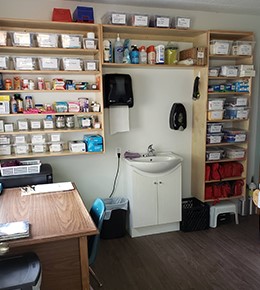 Courtesy of Stacey Contenti
Each camp is set up differently in terms of the job requirements, facilities, policies, available medical supplies, and overall experience for the nurse.
Does the camp provide a designated space for the provision of care?
Typically, you will have a designated area to conduct assessments, provide care, and administer medications. This set-up allows for easy access to equipment and materials while offering privacy for the patient. Be sure to ask about the designated space and available supplies, and request any additional supplies critical to providing care.
Do the parents/guardians sign a medical form authorizing the care of their camper?
In most camp situations, every staff member, camper or volunteer must complete a medical form before they arrive on the property. A common component of the form is a statement that the camp's medical staff is authorized to provide care to the individual. Be sure to ask about this, as it protects you, the camp, and your patient.
Is a charting system in place?
A charting system, whether paper or electronic, is essential to safe nursing practice. The adage “if it’s not charted, it’s not done” is especially true in the camp setting. You may only volunteer for one or two weeks of the summer, so any medical interaction must be documented for future reference.
What is the camp’s communication policy?
The communication policy of each camp will be different, but it is always a crucial aspect of camp nursing. You may be required to share your cell number with staff or the camp may provide you with a cellphone or an alternative device, such as a walkie-talkie if cellular service is poor. Know how you will be contacted and also identify to whom you will report, how you will contact them, and whom to notify in an emergency.
What emergency equipment is available?
The availability of emergency equipment will vary between camps depending on finances and the level of priority given to the department. For example, Epi-Pens, an automated external defibrillator (AED), and a spine board are helpful in an emergency. However, they can be costly, so not all camps will be adequately stocked with these items. Be sure to ask what is available and know where it is located.
What is the protocol for patient transport?
Understanding the camp's patient transport protocol is crucial, especially in emergencies. Camps near an urban centre usually have access to prompt emergency medical services (EMS) care and transport. Camps in rural or semi-remote areas may not have readily available EMS. For example, while working at a camp on Quadra Island, B.C., EMS was available — if they happened to be on the island and not already in use when you needed them. If EMS was off the island or busy, the firefighters were available for immediate assistance and stabilization while waiting for helicopter or Coast Guard transport. Knowing the available resources and the camp's protocol can significantly affect an emergency.
 Courtesy of Stacey Contenti
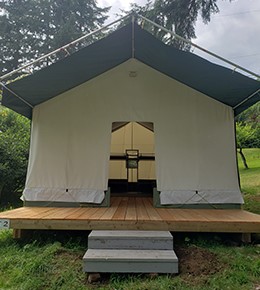
It is pretty standard for camps to provide full accommodation and meals to nurses during their stay.
What else should I consider?
You may need to comply with regulations and you will need to complete a waiver. These will vary based on your province or territory, so be sure to do your research. Also, be sure to prepare a list of necessary supplies and equipment and check it against what the camp already provides.
Once you determine a camp is a good fit, it is time to start the application process. Most camps require a completed application form, references, and a vulnerable sector check. When preparing for arrival, I recommend bringing your stethoscope, as one may not be provided. It is pretty standard for camps to provide full accommodation and meals to nurses during their stay. Check in with the volunteer coordinator or an administrator to determine what is being provided for you.
My highly rewarding experience
I had no idea what to expect when I first volunteered for a week at a small camp in Central Alberta in 2001. It was a wilderness-type camp with platform tents, outhouses and a water pump. Due to the rustic facilities, the number of campers and staff was kept under 75. It was a wonderful experience and an excellent opportunity to learn. I stayed a little longer each summer.
In 2018, I accepted a new opportunity to serve full-time at a large kid’s camp on Quadra Island. The camp doubled as a centre offering year-round retreats. It was a semi-remote situation, where the only way off the island was a small ferry, a helicopter or a boat. Four summer camps ran simultaneously on and off the property. At least 200 people were under my care weekly.
My role on the island was more complex than I had previously experienced. I provided care to campers, summer staff, volunteers, guests, and year-round staff in the summer. In the off-season, I cared for retreat guests, year-round staff, and interns. I quickly became proficient at prioritizing and triaging. Transporting a sick or injured individual off the island to the nearest hospital required intensive resource coordination, was often on a time crunch, and demanded quick decision-making. I learned a lot in my time there.
The days were full and could be long, but the reward was high.
An incredible opportunity
I have thoroughly enjoyed my time as a camp nurse, and I highly recommend it. If you want to experience camp nursing, start with an internet search for “summer camps” or “kids’ camps” in your desired area. Check out the camp’s website or contact them directly for nursing opportunities. They will likely be pleased to hear from you, as many need qualified nurses. You can find a camp that is an excellent fit by asking some good questions, like the ones I posed in this article.
It truly is an incredible opportunity to make a difference in the lives of those you care for.
Stacey Contenti, BScN, RN, MA, works at the Red Deer Regional Hospital Centre, Alberta, in the Facilitated Access to Specialized Treatment (FAST) department.
#career
#career-stage
#child-and-youth
#nursing-practice
#nursing-roles