https://www.infirmiere-canadienne.com/blogs/ic-contenu/2026/05/19/spotlight-reconnaissance-entre-collegues
A simple intervention called Spotlight acknowledges excellence, amplifies unheard voices, and cultivates psychological safety
By Viksit Bali
May 19, 2026
 Courtesy of Viksit Bali
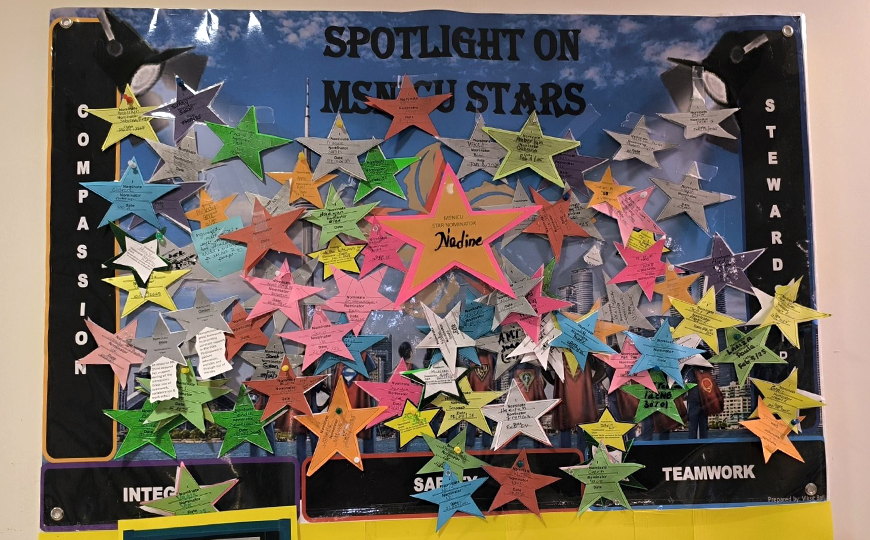
Though modest in form, the Spotlight board was deeply intentional. It was designed to acknowledge excellence in the moment, amplify voices that often go unheard, and cultivate psychological safety in a high-pressure environment.
Intensive care units (ICUs) are known for their clinical complexity, high emotional burden, and relentless pace. Amid critical decision-making and constant demands, moments of gratitude often go unspoken — yet they hold immense power.
At the medical-surgical and neuro ICU at Toronto Western Hospital, burnout, compassion fatigue and disengagement were becoming increasingly visible. Staff shared a quiet but consistent feeling of being unseen, unheard and unappreciated. As a direct-care nurse and Toronto Academic Health Science Network Collaborative Academic Practice Fellow, I led a quality improvement initiative to change that — not through the addition of a budget line or technology, but through something much simpler: peer recognition.
The intervention: Spotlight
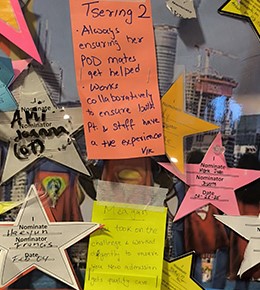
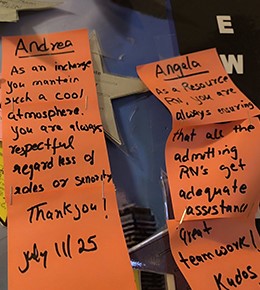
At its core was a simple superhero-themed physical recognition board called Spotlight. It was placed in a central, high-traffic area, where nurses, respiratory therapists, unit clerks, and physicians could nominate one another using simple cards aligned with the values of the University Health Network. These nominations were shared during daily interprofessional huddles, ensuring recognition was immediate, visible and inclusive.
Though modest in form, this intervention was deeply intentional. It was designed to acknowledge excellence in the moment, amplify voices that often go unheard, and cultivate psychological safety in a high-pressure environment.
 Courtesy of Viksit Bali
Recognition need not be expensive or top-down. When it’s peer-driven and value-based, it becomes more authentic and more sustainable.
What changed
The impact was almost immediate. Within weeks:
- Staff participation increased fourfold, from six nominations in the first two weeks to over 30 in the following period.
- There was a 55% reduction in dissatisfaction with staff recognition, based on pre/post surveys using anonymous feedback tools.
- New nurses reported feeling more confident approaching senior staff, describing the environment as “less intimidating and more welcoming.”
- Nurses who typically worked quietly and without fanfare — and often overlooked as they’re doing so — began receiving recognition for their consistency, compassion and presence.
- Physicians began nominating nurses, highlighting their clinical judgment, communication and advocacy.
- Nurses, in turn, recognized physicians who modelled empathy, approachability, and mutual respect.
This wasn’t just about saying “thank you” or “good job.” It became a culture change — a return to a culture that had been locked away during a long, dark period of feeling unseen and unheard. It wasn’t easy to shift, but the simple presence of the physical board encouraged staff to pause, self-reflect, and reconnect with that light of positivity. This force led them to notice and appreciate the efforts of their peers in new and meaningful ways.
Thematic analysis of qualitative feedback revealed three dominant themes:
- Emotional validation: Staff felt seen, appreciated and valued.
- Team cohesion: Nurses reported a “return of lightness” during huddles, with a sense of mutual respect growing within.
- Cultural shift: A culture of inclusivity grew organically. New hires, night staff, and internationally educated nurses reported feeling more welcomed and integrated.
Perhaps most telling were the personal moments: a new nurse in tears after hearing her name read aloud; a member of the care team saying, “This made my week”; and an environmental services worker overjoyed with happiness to see his name among the doctors and nurses, a sight he never had imagined.
Lessons learned
- Recognition need not be expensive or top-down. When it’s peer-driven and value-based, it becomes more authentic and more sustainable.
- Psychological safety can be rebuilt through micro-moments. Small affirmations shared publicly help counter burnout and restore humanity in care.
- Cultural change begins at the bedside. Even in high-acuity settings, where the stress and stakes are high, managers should create a workplace that supports both patients and staff. Grassroots efforts can create a ripple effect, shifting the team dynamics and strengthening interprofessional bonds.
Moving forward
What began as a low-cost quality improvement project is now a part of our unit culture. Spotlight continues to be updated and used, maintained by both staff and leadership allies who witnessed its impact. There is growing interest in adapting this approach in other units — and even other hospitals — as a model for morale-building, especially in post-pandemic recovery.
In health care, we often wait for grand fixes. But sometimes, the most effective changes begin with a pen, a piece of paper, and a moment of recognition. Never underestimate the power of a “thank you” and “well done.”
Viksit Bali, RN, BN, MHA, is an advanced practice nurse educator at Toronto Western Hospital, University Health Network, and a consultant with PBA Canada.
#practice
#clinical-practice
#interprofessional-collaboration
#intra-professional-collaboration
#nurses-health-and-well-being