https://www.infirmiere-canadienne.com/blogs/ic-contenu/2026/02/23/changement-culture-soins-longue-duree
Case study of Idlewyld Manor reveals improved emergency department transfer rates and other positive outcomes
By Elizabeth Wojtowicz, Jennifer Walker, & Bahar Karimi
February 23, 2026
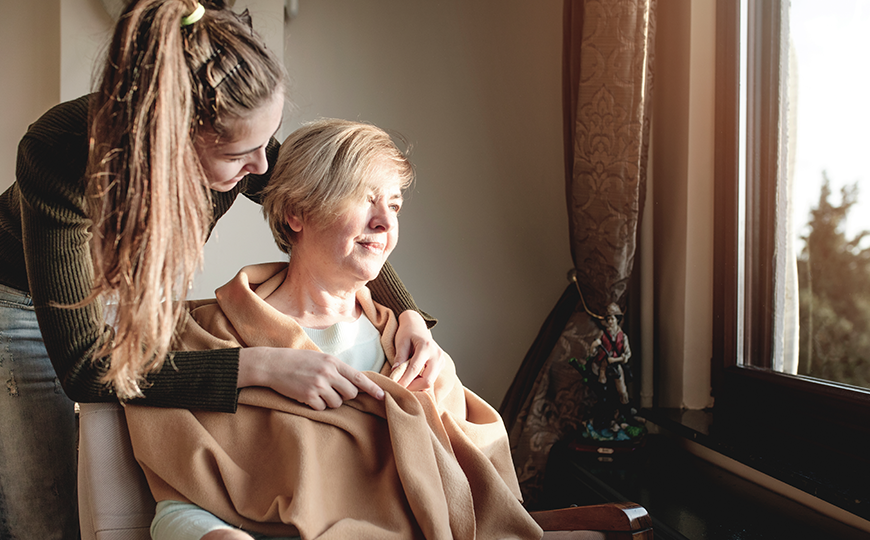 istockphoto.com/Xesai
Many people entering LTC are in their final year of life. Initially, palliative care was only provided in the last weeks or days of life. However, starting this approach earlier can help make the remaining months, weeks and days more comfortable and less distressing.
Takeaway messages
When implementing a palliative approach to care in your long-term care home:
- Provide on-site and virtual education to enhance knowledge translation.
- Form teams of palliative care champions to help support care conversations, leveraging community partnerships for external mentorship.
- Cultivate a culture that embraces a palliative approach to care, supported by leadership and resources to empower team members to provide personalized care.
Background
Long-term care in Canada
Canada’s population is aging. According to Statistics Canada, a shift in the country’s demographics shows an increasing number of individuals older than age 65 — a jump from 18.9% of the population in 2023 to a projected 23.4% by 2030 (Statistics Canada, 2024). Older adults often develop chronic conditions and, as they age, may require more intensive health support such as living in a long-term care (LTC) home, which provides 24-hour nursing and personal care (Government of Ontario, 2024). Signal49 Research, formerly the Conference Board of Canada, projects that by 2035, almost half a million Canadians will require more intensive levels of care. Research and policy must focus on key issues in this health-care sector (Gibbard, 2017).
The COVID-19 pandemic revealed significant flaws in the current Canadian LTC model, leading to calls for a transformation from an institutional biomedical approach to one that prioritizes quality of life and person-centred care (Coupal et al., 2024). Person-centred care focuses on delivering individualized, relationship-based care in a positive, social environment. Research has shown that implementing person-centred care strategies can lead to better outcomes compared with traditional institutional models (Coupal et al., 2024). Given an average stay of only two years and high annual mortality in LTC homes, the need for a person-centred and palliative approach to care becomes even more critical (Canadian Institute for Health Information [CIHI], 2023).
Palliative approach to care
Palliative care in Canada became an official specialty in 1993. It is an approach to care that aims to reduce suffering toward the end of life. The World Health Organization defines palliative care as enhancing the quality of life for patients and families facing life-threatening illnesses by addressing their physical, psychological, and social needs (World Health Organization, 2023). This approach is vital, as it addresses end-of-life choices, coping with grief, managing care issues, and promoting overall well-being (World Health Organization, 2023).
A palliative approach to care now introduces a focus on quality of life and symptom management earlier in a person’s illness course (CIHI, 2023). It can be applied alongside curative treatments and is provided by family physicians, nurse practitioners and nurses for individuals with progressive, life-limiting illnesses. This approach enhances quality of life throughout the illness by addressing physical, psychological, social, spiritual and practical issues for both the individual and their families (CIHI, 2023).
Many people entering LTC are in their final year of life. Initially, palliative care was only provided in the last weeks or days of life. However, starting this approach earlier can help make the remaining months, weeks and days more comfortable and less distressing. Early identification and assessment of palliative care needs allow practitioners to improve residents’ quality of life by documenting their values and goals and providing symptom management tailored to what matters most to them (CIHI, 2023).
Case study
In this case study, we outline the objectives and relevance of, and evidence for, implementing a palliative approach to care framework in a Canadian LTC home.
Setting
Idlewyld Manor is an accredited not-for-profit LTC home in Hamilton, Ontario. It has 192 beds, including 20 for medically complex residents. Operated by Thrive Group, an umbrella charitable organization focused on health-system transformation, Idlewyld Manor emphasizes a resident-centred approach that empowers individuals in their care decisions.
Idlewyld Manor is pursuing designation as a Best Practice Spotlight Organization (BPSO) by the Registered Nurses’ Association of Ontario (RNAO). Since 2022, Idlewyld Manor has focused on palliative and end-of-life care, empowering its team through annual training and establishing palliative care directives and “comfort carts.”
Practice problem
In 2020–21, while we were applying to become an RNAO BPSO candidate, our team at Idlewyld Manor identified gaps in palliative and end-of-life care. While the compassionate staff aimed to provide resident-centred care, consistent practices were lacking. Knowledge gaps existed regarding the differences between palliative care and end-of-life care, and there was discomfort around necessary conversations and the support families and loved ones needed.
Summary of evidence
Despite more than a decade of evidence supporting a palliative approach in LTC homes, there has been consistent underfunding and understaffing in these facilities (CIHI, 2023). Recently, LTC reform has prioritized palliative care in regulations and funding, as mandated by the Fixing Long-Term Care Act in Ontario and set out in the Canadian National Long-Term Care Services Standard (Government of Ontario, 2022; Health Standards Organization, 2023).
A palliative approach to care promotes quality of life and symptom management in alignment with patients’ wishes. Evidence shows that a palliative approach to care enhances patient and family experiences, improves health-care provider satisfaction, and reduces costs by decreasing emergency visits and medical expenses in the last six months of life (CIHI, 2023). However, providers face barriers such as insufficient skills, time constraints and uncertainty about when to initiate goals of care conversations (CIHI, 2023). Better training, clearer roles, and greater public awareness about palliative care would help facilitate implementation (CIHI, 2023).
Application of evidence
At Idlewyld Manor, we used an evidence-based approach to implement the following initiatives, which were informed by RNAO’s Best Practice Guideline: A Palliative Approach to Care in the Last 12 Months of Life.
- Practice recommendations at end of life:
- Assessment
- Decision support
- Care and management
Examples: Palliative care “comfort carts” for families/visitors, quilts for residents at end-of-life, honour guards, memorials and after-death staff huddles.
- Educational and team support recommendations:
Examples: Education for all care providers (personal support workers, social workers, nurses, leaders), increased support from nursing leaders to empower the RN team, bereavement support program for families.
- Organizational and policy recommendations:
- Health-care consent
- Advance-care planning and resuscitation policies
- End-of-life policy
- Pronouncement of death and care of the body after death
Examples: Prevention of error-based transfers, promotion of Advanced Clinical Practice Fellowship, implementation of the Canadian Serious Illness Conversation Guide.
Implementing the above resulted in transformative, culture-changing processes. This implementation process was guided by RNAO’s Leading Change Toolkit and the Knowledge-to-Action Framework (RNAO, n.d.).
Initial uptake of the guidelines focused on task-based activities related to end-of-life care. Our team of personal support workers, housekeepers, dietary aides, recreation therapists, social workers and nurses collectively brainstormed and came up with the idea to establish palliative care “comfort carts,” which provided resources for families and visitors. In addition to the carts, personalized quilts were placed on the beds of residents nearing the end of life and an honour guard respectfully accompanied them on their final journey from the home with dignity after death.
Ongoing implementation of the palliative approach to care emphasized education and support, with targeted training for personal support workers, nurses, and leadership team members — provided by our pain and palliative symptom management consultant — to ensure everyone was equipped to deliver compassionate care. Nursing leaders enhanced their support for the team by facilitating after-death huddles to encourage reflection and learning. Finally, the social work team introduced a bereavement support program for families to assist them during their grieving process.
During the three-year BPSO designation period (2022–2025), we concentrated on policy development, aligning our practices with the palliative approach to care. Our participation in research, such as the Prevention of Error-based Transfers initiative, further improved our practices. One of our nurse practitioners was awarded an RNAO Advanced Clinical Practice Fellowship, which was instrumental in integrating the Canadian Serious Illness Conversation Guide into everyday nursing practice, ensuring that discussions about goals of care planning were prioritized. This comprehensive approach reinforced our commitment to evidence-based practice and cultivated a culture of empathy and support throughout the home.
Outcomes
Idlewyld Manor has experienced a significant cultural shift since embarking on our journey as a candidate for the RNAO BPSO designation. Here are some of the most notable outcomes:
- Improved emergency department transfer rates, from 20% in 2019 to just under 9% in 2024. This success can be attributed to the implementation of a palliative approach to care, comprehensive care planning, and meaningful conversations about goals of care, enhancing our ability to effectively meet residents’ needs.
- Implementation of the Canadian Serious Illness Conversation Guide in 2023, which has proven invaluable in facilitating essential goals of care discussions. These conversations have become an integral part of our regular care conferences and are tailored to respond to the evolving conditions of our residents.
- High resident satisfaction ratings due to enhanced care planning using a palliative approach and commitment to enhancing the overall quality of life.
- Recognition of excellence, with awards such as the Dr. Anthony Kerigan Award for Leadership in Integrating Palliative Care in a Long-Term Care Home (2023) and the AdvantAge Ontario Innovation & Excellence Supporting Seniors Award (2024).
Lessons learned
- Enhanced educational programs and virtual resources significantly improve understanding and preparedness for palliative care among residents, families and health-care teams. By making use of on-site training and virtual resources, access to essential information has improved, ensuring that everyone feels more informed and prepared during care transitions.
- Collaboration among team members is essential for enhancing communication and care outcomes, leading to a more personalized treatment approach.
- Establishing teams of palliative care champions empowers staff to engage confidently in goals of care conversations, fostering better patient and family experiences.
- Partnering with community organizations strengthens available support, particularly in grief and bereavement, enhancing overall care quality.
- Investing in education, collaboration, and leadership support helps create a compassionate LTC home that honors each resident’s journey with dignity and comfort.
A truly compassionate LTC home is one that embraces the palliative approach as a fundamental part of its culture. When we listen, learn and adapt, we create not just a care system — we build a community where dignity, comfort, and meaningful connections define every stage of life.
References
Canadian Institute for Health Information. (2023). Access to palliative care in Canada. https://www.cihi.ca/sites/default/files/document/access-to-palliative-care-in-canada-2023-report-en.pdf
Coupal, A., Dale, A., Duncan, D., Levin, L., Quenneville, C., Simon, D., Sur, D., & VanderBent, S. (2024). How to support our frail elderly: Suggested action plan. Ontario Caregiver Organization, Ontario Hospital Association, Ontario Long Term Care Association, AdvantAge Ontario, Canadian Mental Health Association (Ontario Division), Ontario Community Support Association, Ontario College of Family Physicians, Home Care Ontario. https://www.longwoods.com/content/27404/better-care-for-our-aging-population-is-a-collective-responsibility
Gibbard, R. (2017). Sizing up the challenge. Meeting the demand for long-term care in Canada. The Conference Board of Canada. https://www.cma.ca/sites/default/files/2018-11/9228_Meeting%20the%20Demand%20for%20Long-Term%20Care%20Beds_RPT.pdf
Government of Ontario (2024). Long-term care overview. https://www.ontario.ca/page/long-term-care-ontario
Government of Ontario (2022). Fixing long-term care act, 2021, S.O., c. 39, Sched. 1. Ontario e-Laws. https://www.ontario.ca/laws/statute/21f39
Registered Nurses’ Association of Ontario. (2020). A palliative approach to care in the last 12 months of life. https://rnao.ca/bpg/guidelines/palliative-approach-care-last-12-months-life
Registered Nurses Association of Ontario. (n.d.). Leading change toolkit. (4th Ed.). https://rnao.ca/bpg/leading-change-toolkit
Statistics Canada. (2024). Older adults and population aging. https://www.statcan.gc.ca/en/subjects-start/older_adults_and_population_aging
World Health Organization. (2023). Palliative care: key facts. https://www.who.int/europe/news-room/fact-sheets/item/palliative-care
Elizabeth Wojtowicz, RN (EC), NP-PHC, MHM, GNC(C), CHPCN(C), is a PhD student at McMaster University and clinical lead with the Thrive Group Centre of Excellence.
Jennifer Walker, RPN, LTC-CIP, is resident care supervisor and infection prevention & control lead at Idlewyld Manor.
Bahar Karimi, RN, MN, M.H.Sc., CHE, is the executive director of LTC services with the Thrive Group Centre of Excellence.
#analysis
#care-models
#end-of-life-care
#nursing-practice
#palliative-care
#patient-care
#quality-improvement