https://www.infirmiere-canadienne.com/blogs/ic-contenu/2026/01/26/fort-et-rassembleur-terre-neuve-et-labrador
CNA Chapter formed to ensure nursing voice influences health policy
By Laura Eggertson
January 26, 2026
 istockphoto.com/KenWiedemann
The Newfoundland and Labrador Chapter will focus on issues impacting nurses and the nursing profession at the provincial level, share members’ perspectives on federal issues, and bring national concerns and professional development opportunities to provincial members.
Editor’s note: If you are committed to advancing nursing, passionate about leadership, and eager to make a difference, we invite you to put your name forward and join the Newfoundland and Labrador Chapter executive committee. The application deadline is March 1, 2026. Learn more and apply.
During her 49 years of nursing, and in the seven years since she retired, Madge Applin has always understood the importance for the Canadian health-care system of having nurses represented at decision-making tables.
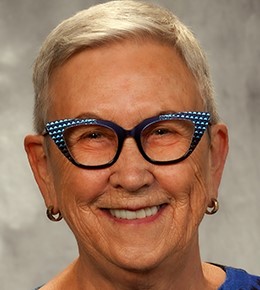 Courtesy of Madge Applin
“I don’t think there has ever been a time, at least in my professional lifetime, where there was a greater need than now for a strong and united nursing advocacy voice, provincially and nationally,” Madge Applin says.
“There is no other group that understands the profession of nursing better than its members,” says Applin, chair of the Newfoundland and Labrador Nurses Association Working Group.
Throughout her career, the registered nurse, outpost nurse, educator, nursing leader, and consultant has weathered the storms of health-care redesigns, bed closures, budget cuts, and negotiations to expand the scope of nursing practice.
As those challenging events unfolded, Applin looked to the Canadian Nurses Association (CNA) and associations in the provinces and territories where she worked to advocate for the interests of nurses in designing, implementing, and influencing health policy to improve patient care and health outcomes.
But current crises in morale, nursing shortages, overcrowded hospitals, and understaffed long-term care facilities have driven the health-care system to a critical point — and at the same time, nurses have fewer vehicles for advocacy.
“I don’t think there has ever been a time, at least in my professional lifetime, where there was a greater need than now for a strong and united nursing advocacy voice, provincially and nationally,” Applin says from her home in St. John’s.
That’s why Applin and a core group of nurse advocates, along with the support of a dedicated team at CNA, are championing the creation of a Newfoundland and Labrador Chapter of CNA.
Waning influence
Changes to the Registered Nurses Act in Newfoundland and Labrador in 2019, as well as amendments to similar legislation in most other provinces and territories, are largely responsible for the waning influence of nurses in health policy discussions over the last decade, Applin believes.
In Newfoundland and Labrador, the 2019 amendments changed the name and mandate of the Association of Registered Nurses of Newfoundland and Labrador (ARNNL) to the College of Registered Nurses of Newfoundland and Labrador. The new college’s mandate focused on regulating the nursing profession in the interest of public safety.
In doing so, the prominent professional advocacy role previously executed by ARNNL was diminished, resulting in a significantly weakened professional nursing voice presence in influencing public health, health care and nursing policy in Newfoundland and Labrador, Applin says.
“Specifically with the change in legislation separating the advocacy voice from the regulatory part of nursing, I have become acutely aware that the influencing potential of that voice has lessened over the last years, since the change in legislation provincially as well as nationally,” she says.
CNA announced the Newfoundland and Labrador Chapter in May 2025. The new chapter will represent and advocate for nurses in the province, promote the profession, and encourage professional development, leadership growth, and nursing practice opportunities.
As a chapter, the Newfoundland and Labrador organization will focus on issues impacting nurses and the nursing profession at the provincial level, share members’ perspectives on federal issues, and bring national concerns and professional development opportunities to provincial members.
Leaving profession
Nursing shortages are among those unique challenges, as the Montreal Economic Institute highlighted in an October 2025 report analyzing nursing supply across the country. As of 2023, Newfoundland and Labrador had 98 nurses under 35 leaving the province or potentially the profession for every 100 who joined it.
Involuntary overtime, violence or abuse in the workplace, and high stress were the top reasons young nurses across the country cited for leaving a jurisdiction or the profession.
Having the nursing voice at the table is critical not only to address these issues for the nursing profession, but also necessary to ensure the health of the patients that nurses serve, Applin says.
 Courtesy of Cheryl Dyke
“I want the voices of Newfoundland and Labrador nurses to be involved where decisions are being made that shape the nursing profession and impact patient care,” Cheryl Dyke says.
“Care is only as competent and caring as the workers within the system who must also feel cared for,” she stresses. “Nurses are saying loudly and clearly that they are hurting. They are overworked. They feel devalued.”
The chapter will bring a new advocacy voice for nurses that will work with the government to address these concerns “in a prompt way,” she hopes.
Improving the culture of work so that nurses feel safe, valued, and respected is one of the issues nurses in Newfoundland and Labrador want the new chapter to address — issues that resonate with nurses across the country.
In a 2022 survey the working group conducted, 1,543 nurses in Newfoundland and Labrador singled out safe staffing levels, zero tolerance for abuse in the workplace, the need for professional development on virtual care, concerns about work-life balance and attention to workplace violence as major advocacy issues they wanted an association to address. Cheryl Dyke, a registered nurse and co-chair of the Newfoundland and Labrador Chapter Steering Committee was one of the working group members who conducted the survey.
Weigh-in on decisions
Applin sees the need for the new chapter of CNA to weigh in on health-care decisions the province is making.
For example, Newfoundland and Labrador’s auditor general has pointed to issues surrounding the province’s decision to hire private travel nurses to cope with the nursing shortages. The decision resulted in a two-tier payment system and inadvertently created additional problems.
The Registered Nurses’ Union Newfoundland and Labrador pointed out in 2024 that contracts signed with private travel nursing companies led to agency nurses receiving substantially more wages per hour than registered nurses and nurse practitioners working in the public system.
Some of those contracts also stipulated that nurses working for a private company could not go back to work in the public system for a year after they left the private organization.
That clause exacerbated the nursing shortage rather than solving it, something that might have been avoided if organizations representing nurses in all types of practice had been part of the initial discussions around how to solve the nursing shortage, members of the working group say.
Dyke would like to see positive social media campaigns highlighting the rewarding aspects of nursing as a career, to increase the number of people applying to nursing schools.
One of the other challenges current workloads and nursing shortages has created is the difficulty of finding preceptors for nursing students when they are training — an issue Dyke also hopes the new chapter can work with the province, nursing programs, regulators and unions to address.
Increased learning opportunities
“I want the voices of Newfoundland and Labrador nurses to be involved where decisions are being made that shape the nursing profession and impact patient care,” Dyke says.
 Courtesy of Mollie Butler
“I know just talking to friends and former colleagues that there is a lot of frustration in the system — but I don’t think it’s unique to Newfoundland and Labrador. I think it’s happening across the country,” Mollie Butler says.
CNA offers incredible opportunities for professional development, which is one of the benefits Dyke is most excited about because she knows how important it is to her own career.
“I don’t know where I’d be today as a nurse if it wasn’t for what the CNA has built in Canada for nurses,” she says. “I see CNA as visionaries and leaders in moving the nursing profession forward.”
She’s also pleased that the new chapter will represent all streams of nursing — licensed practical nurses, registered nurses, nurse practitioners, and nurses in academia and in management positions — leading to increased collaborations among all practice teams, she says.
Mollie Butler is another of the nurse leaders who worked hard to create the Newfoundland and Labrador Chapter of CNA. Butler retired four years ago after serving as the director of professional practice for nursing and allied health and Indigenous health for Eastern Health, one of four former health authorities now combined to make up the provincial authority called Newfoundland and Labrador Health Services.
She is particularly pleased that nurses not represented by unions will now have an advocacy voice.
Voices unmuzzled
“Anybody who is a nurse educator or manager, their voices are muzzled — there’s no place for them to speak up,” Butler says. “I think those two groups would be encouraged to join” the new chapter.
Nursing in Newfoundland and Labrador can only benefit from having leaders that respond to current, topical issues by helping federal and provincial/territorial governments understand how ongoing issues affect not only nurses, but the quality of health care, Butler says.
“I know just talking to friends and former colleagues that there is a lot of frustration in the system — but I don’t think it’s unique to Newfoundland and Labrador. I think it’s happening across the country,” she adds.
Like Dyke, Butler believes one of the most valuable aspects of the new chapter will be the increased opportunities for mentoring and professional development that CNA offers.
“Mentoring and having group discussions are really good, because sometimes you are in situations where you think you’re the only one,” Butler says. “Then you hear your colleagues express similar concerns or have other ideas. I think that whole conversation is really important.”
Butler, Dyke, Applin, and the other leaders who spearheaded the launch of this new chapter believe its existence is vital to improving the provincial, territorial and national health-care systems. They’re confident the chapter will help lead to better patient care, which is the ultimate goal.
“What the chapter brings is the ability to advocate, to represent, to speak for, and to encourage health planners and governments to recognize and maximize the potential contribution of nurses to the health-care system and to … the health of people within their respective jurisdictions,” Applin says.
Laura Eggertson is a freelance journalist based in Wolfville, N.S.
#profiles
#advocacy
#government-legislation
#leadership
#nursing-regulation
#recruitment-and-retention