https://www.infirmiere-canadienne.com/blogs/ic-contenu/2026/09/08/sauver-une-vie-et-offrir-des-soins-de-confort
The many shades of grey in nursing between heroics and humanity
 istockphoto.com/andresr
At first, the science takes centre stage. The patient is admitted to the ICU, surrounded by machines that hum and beep like a symphony of survival. But as the layers of illness unfold, the truth emerges: chronic disease, cancer, comorbidities stacked like dominoes waiting to fall.
In a world obsessed with outcomes, nursing reminds us that sometimes the greatest victory is not in saving a life, but in honouring it — gracefully, tenderly — until the very end.
 Courtesy of Marianne M. Rowland
“Sometimes, doing more means doing less. Sometimes, the greatest act of care is to ease suffering, not prolong it,” Marianne M. Rowland says.
There is a space in nursing that few outside the profession truly understand — a space painted in many shades of grey, where the nurse stands between saving a life and providing comfort care. It is here that the science and art of nursing collide, demanding not only technical mastery but profound emotional intelligence.
Some patients arrive with conditions so advanced that the chance of meaningful recovery is almost nonexistent. Yet, they come to the hospital asking for everything to be done — every heroic measure, every intervention. Full code. The words echo like a battle cry, summoning the precision and urgency of critical care.
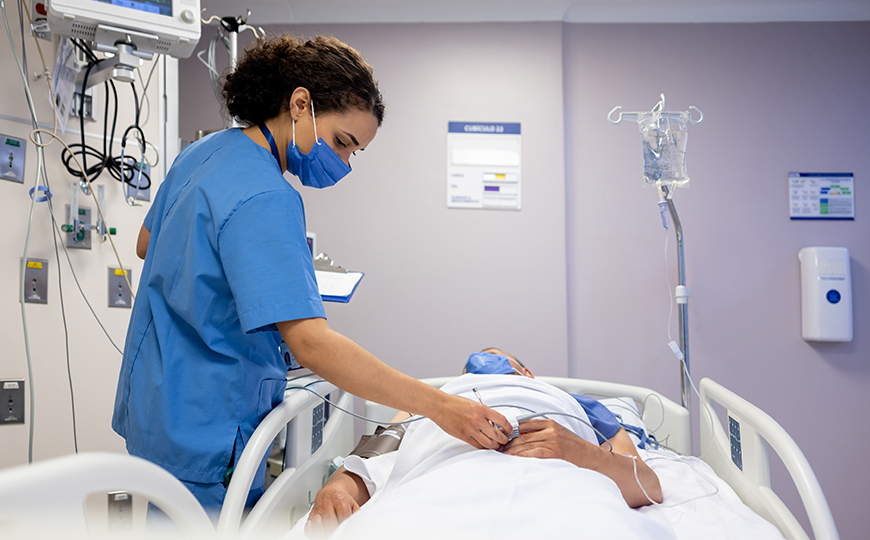
At first, the science takes centre stage. The patient is admitted to the ICU, surrounded by machines that hum and beep like a symphony of survival. Inotropic drips flow, ventilators stand ready, and the team works tirelessly to treat the root cause of the crisis. Perhaps it began with something deceptively simple — say, a seasonal flu that spiraled into septic shock. But as the layers of illness unfold, the truth emerges: chronic disease, cancer, comorbidities stacked like dominoes waiting to fall.
Days pass. The prognosis darkens. The nurse watches numbers on monitors — oxygen saturation dipping, blood pressure faltering — and feels the weight of time pressing in. Time becomes the only constant, and in that time the nurse must surrender fully to the role: caregiver, advocate, and witness to a life lived and now slipping away.
Then come the conversations — the ones that change everything.
"Why don’t I have pain?"
"I didn’t even know I was sick."
"Are you telling me I might not survive?"
The family sits in stunned silence, their faces a canvas of fear and disbelief. The nurse feels the air thicken with questions, guilt, denial. The physician explains ventilators, CPR, and the near futility of further interventions. But the nurse knows these words land like stones in a pond — rippling confusion, not clarity. In those moments, even simple explanations can feel overwhelming to patients and families, leaving them unsure how to take the next step.
Health literacy is low. Emotions are high. Decisions loom large. And through it all, the family places their trust in the health-care team, hoping for guidance down a path no one wants to walk.
For the nurse, this is the true test. Trained to fight for life, to titrate drips and adjust oxygen, the instinct is to do more. Yet the heart whispers another truth: sometimes, doing more means doing less. Sometimes, the greatest act of care is to ease suffering, not prolong it.
As the patient nears death, the body betrays itself — hypoxia brings air hunger, confusion, panic. Medications are given to calm the storm, to quiet the catecholamine surge. It is a delicate dance of pharmacology and compassion, a race against the clock where the finish line is not survival but peace.
And in those moments — the ones between interventions and silence — the nurse feels the ache of humanity. Tears blur the chart. Fear creeps in: Will this medication end their life before they say goodbye? So the nurse turns to other comforts: family presence, music, a gentle hand resting on a trembling one. Photographs placed at the bedside like anchors to memory.
Finally, there comes a shift. The language changes from “prognosis is poor” to “the patient is dying.” And in that shift, the nurse reflects inward, searching for solace in the simplest truth: I am enough. Compassion is enough. Kindness is enough.
This article is dedicated to the nurses who transition into critical care nursing and provide care to patients and their families in this space between saving a life and providing comfort care.
Marianne M. Rowland, RN, BScN, CNCC(C), is a staff nurse in the critical care unit at Woodstock Hospital, Ontario, and a clinical instructor in the Arthur Labatt Family School of Nursing at Western University and at Conestoga College.
#opinions
#end-of-life-care
#nurse-patient-relationship
#clinical-practice
#ethics
#nurses-health-and-well-being