https://www.infirmiere-canadienne.com/blogs/ic-contenu/2026/06/15/optimiser-lutilisation-des-inhalateurs-prescrits
Nurses play a vital role in supporting effective, safe, and environmentally responsible inhaler use
By June Kaminski
June 15, 2026
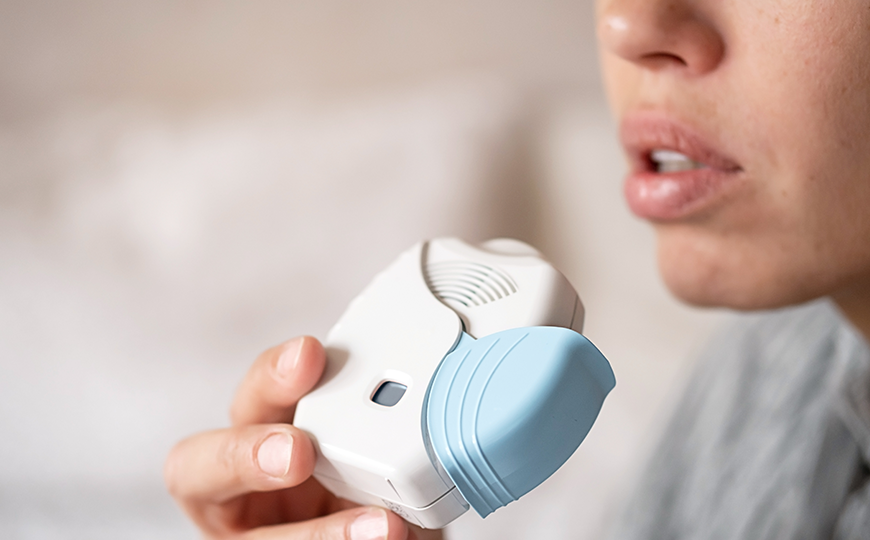 istockphoto.com/Evgeniya Pavlova
Optimizing inhaler use begins with understanding the individual patient’s treatment needs. Factors such as age, comorbidities, cognitive function, dexterity, socioeconomic status, and cultural background all affect the suitability and effectiveness of different inhaler types.
Takeaway messages
- A planetary health lens can be used by nurses to guide inhaler choice and use.
- Metered dose inhalers (MDIs) use high greenhouse gas propellants that are far more potent than carbon dioxide.
- Nurses play a pivotal role in guiding patients toward respiratory treatments that are effective, individualized, and minimize harm to the environment.
Inhaler use and greenhouse gas emissions
Inhaled medications are a cornerstone of respiratory care in Canada, particularly for people living with asthma and chronic obstructive pulmonary disease (COPD). However, the environmental cost of these therapies is gaining attention (Gagné et al., 2023; Gupta et al., 2023). Commonly prescribed metered dose inhalers (MDIs) use hydrofluorocarbon (HFC) propellants that are potent greenhouse gases (GHGs) with global warming potentials 1,300-3,350 times greater than carbon dioxide (Douglass et al., 2025).
According to a recent study, inhalers contributed an estimated 21.8% of total emissions from Fraser Health facilities in western Canada, primarily from MDIs (Liang et al., 2023). This has spurred a move away from MDIs to greener alternatives. “Dry powder inhalers and soft mist inhalers do not use propellants and have a lower carbon footprint” (Liang et al., 2023, p. 122). Although all inhalers have a similar carbon footprint at the initial manufacturing stage, this changes drastically at the treatment and usage stage of the life cycle (Douglass et al., 2025).
Nurses, as direct-care professionals and patient educators, play a vital role in supporting effective, safe, and environmentally responsible inhaler use. A planetary health nursing lens, focused on holistic care, equity, and sustainability can guide improvements in inhaler prescribing and use for the benefit of both people and the planet (Canadian Nurses Association and Canadian Association of Nurses for the Environment, 2024).
Inhaler footprint comparison
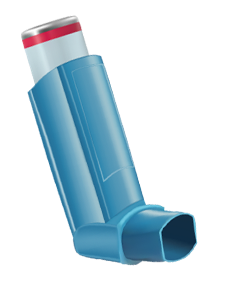
Metered dose (MDI)
CO₂ equivalent = 10–28 kg
Uses HFC propellants
Propellant releases medication
High environmental impact
Example: Ventolin MDI
 |
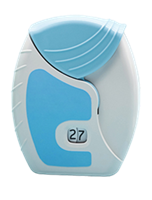
Dry powder (DPI)
CO₂ equivalent = 0.5–1 kg
No propellants required
Breath activated mechanism
Low environmental impact
Example: Advair Diskus
 |
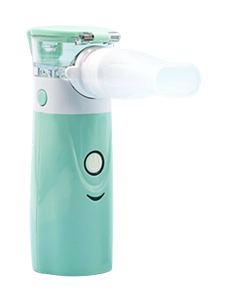
Soft mist (SMI)
CO₂ equivalent = 0.8 kg
No propellants required
Mechanical energy makes mist
Low environmental impact
Example: Respimat
 |
A whole-person, lifespan approach to inhaler use
Optimizing inhaler use begins with understanding the individual patient’s treatment needs. Factors such as age, comorbidities, cognitive function, dexterity, socioeconomic status, and cultural background all affect the suitability and effectiveness of different inhaler types.
For instance, children and some older adults may require MDIs with spacers to coordinate actuation and inhalation effectively. Conversely, many adults with good inspiratory flow may benefit from switching to a dry powder inhaler (DPI), which requires no propellant and thus has a significantly lower carbon footprint. However, this switch is not always straightforward. A person with severe arthritis or poor hand strength may struggle to activate certain DPIs. Nurses are uniquely positioned to assess these factors and advocate for a personalized approach to inhaler prescribing.
A whole-person, lifespan approach also includes understanding and addressing barriers to inhaler access and use. For example, some greener inhalers may not be covered by a person’s drug plan or may carry higher out-of-pocket costs (BCGuidelines.ca, 2023; Gupta et al., 2023). Nurses can help patients navigate these issues, connecting them with resources such as financial assistance programs or working with prescribers to find suitable alternatives.
Accurate diagnosis and treatment
In an analysis by Gagné et al. (2023), data showed that 33% of Canadian adults previously diagnosed with asthma did not meet diagnostic criteria when assessed with objective spirometry testing. Yet, 79% of these individuals were using asthma medications regularly. Similarly, they found that 44% of patients diagnosed with COPD did not have the disease based on objective testing, yet 67% of them continued to receive COPD medications. These and similar findings (Douglass et al., 2025; Gupta et al., 2023) highlight the importance of accurate diagnosis and regular reassessment in chronic respiratory disease management to avoid unnecessary treatment and medication burden. In doing so, this can reduce potential patient harm, costs, and environmental impacts. Both asthma and COPD are chronic diseases that frequently require lifelong treatment, making it critically important that diagnosis is accurate, validated, and properly monitored.
Reinforcing proper technique: a core nursing responsibility
The way that patients use inhalers also affects their environmental impact. Studies consistently show that a large proportion of people with asthma and COPD use their inhalers incorrectly (Douglass et al., 2025; Gupta et al., 2023) and too frequently (Gagné et al., 2023). Common errors include failing to shake MDIs before use, not using a spacer with MDIs, not breathing in slowly and deeply enough, or exhaling into DPIs before inhalation. Another common and expensive mistake is that inhalers are disposed of before they are empty (Douglass et al., 2025; Liang et al., 2023). These errors compromise drug delivery, reduce symptom control, waste materials, increase costs, and may lead to overuse or unnecessary escalation of therapy.
Teaching and reinforcing proper inhaler technique is a central nursing function. Best practices include:
- Demonstrating correct use of devices
- Using the “teach-back” method to assess patient understanding
- Providing educational videos, visual aids and printed materials
- Checking technique at every point of care, including hospital discharge and during community visits
Regular reassessment is also key. Inhaler technique can decline over time, especially if there are changes in cognitive function, motor ability, or if new devices are introduced. Nurses in primary care, hospital, and home care settings can reinforce best practices and ensure patients are confident and competent in inhaler use, whichever delivery method is prescribed.
Advocating for informed, personalized inhaler choices
There is growing awareness that inhaler selection can align clinical effectiveness with environmental stewardship. “Switching one year of an adult patient's daily controller MDI to a DPI would prevent 234kg CO2 emissions” (Douglass et al., 2025, p. 4) and reduce “78% of annual inhaler emissions” (Liang et al., 2023, p. 125). For further comparison, MDIs available in Canada account for 10-28kg CO2 equivalents/inhaler; DPIs cause 0.5-1kg CO2 equivalents/inhaler; and soft mist inhalers produce around 0.8kg CO2 equivalents/inhaler (Douglass et al., 2025). Despite this, DPIs and low global warming potential alternatives such as soft mist inhalers remain underutilized in many settings due to prescriber unfamiliarity, or a lack of awareness of the benefits of switching from MDIs.
Inhaler switching must be patient centred. Nurses can support this by:
- Educating patients about the environmental differences between inhalers
- Discussing personal preferences, capabilities and values
- Reassuring patients that DPIs are clinically equivalent for many conditions
- Collaborating with pharmacists and prescribers to explore suitable options and use inspiratory flow check devices to assess suitability for DPI or soft mist use
Importantly, the goal is not to eliminate MDIs entirely. They remain essential for some patients and in acute situations. However, thoughtful prescribing can reduce unnecessary reliance on MDIs when DPIs or low global warming potential alternatives are appropriate.
Professional bodies are beginning to support this shift. The Canadian Thoracic Society encourages shared decision-making that incorporates environmental considerations, provided safety and efficacy are maintained (Gupta et al., 2023). Nurses can be strong advocates for this balanced approach.
Supporting inhaler recycling and proper disposal
Even with proper use, inhalers can pose environmental risks if discarded improperly. Residual propellant gas in MDIs can escape into the atmosphere from landfills, and plastic components of all inhaler types may persist in the environment for centuries (Douglass et al., 2025).
Although Canada lacks a standardized national program for inhaler recycling (Zou et al., 2024), some pharmacies offer medication return programs that include inhalers. The Health Products Stewardship Association (2024; 2025) offers guidelines and a searchable database of pharmacies that accept inhalers for recycling and disposal in six provinces.
Nurses can:
- Educate patients on the importance of returning used inhalers to pharmacies
- Dispel myths about partial refills or reuse of old inhalers
- Collaborate with community partners to promote responsible disposal
- Advocate for broader implementation of return programs across provinces
By encouraging inhaler returns and recycling, nurses support a culture of environmental accountability within medication management, an often overlooked but impactful aspect of sustainability in health care (Douglass et al., 2025).
Nursing leadership for sustainable respiratory care
As climate change increasingly intersects with health, nurses can be instrumental in guiding patients toward respiratory treatments that are effective, individualized, and environmentally sound. From reinforcing proper inhaler technique (e.g., increasing the life cycle and dosages available in DPIs) to advocating for greener prescribing and supporting safe disposal, nursing actions can improve both patient outcomes and environmental performance.
Ultimately, inhaler optimization is not simply a clinical issue, it is an ethical one. Nurses are trusted voices in health promotion and sustainability. By engaging in this work, we reaffirm our commitment to caring not only for individual patients, but for the collective well-being of communities and the planet.
References
BCGuidelines.ca (2023). Asthma diagnosis, education and management: Appendix C. Government of British Columbia. https://www2.gov.bc.ca/assets/gov/health/practitioner-pro/bc-guidelines/asthma_appendix_c.pdf
Canadian Nurses Association and Canadian Association of Nurses for the Environment. (2024). Planetary health. [Position Statement]. https://hl-prod-ca-oc-download.s3-ca-central-1.amazonaws.com/CNA/2f975e7e-4a40-45ca-863c-5ebf0a138d5e/UploadedImages/documents/policy-advocacy/CNA-Planetary-Health-position-statement_E.pdf
Douglass, R., Sergeant, M., Zvereva, E., McDermott, E., Gill, P., Kang, S., Kaminski, J., Sypus, A., Bhardwaj, L., Feng, L., Dunn, M., Gayowsky, T., & Davis, M. (2025). The C.A.R.E. project guide. Hamilton Family Health Team Green Initiative and Canadian Coalition for Green Health Care. https://hamiltonfht.ca/about-us/green-initiative/c-a-r-e-clear-air-respiratory-excellence-2/
Gagné, M., Karanikas, A., Green, S., & Gupta, S. (2023). Reductions in inhaler greenhouse gas emissions by addressing care gaps in asthma and chronic obstructive pulmonary disease: an analysis. BMJ Open Respiratory Research, 10(1): e001716. doi:10.1136/bmjresp-2023-001716
Gupta, S., Couillard, S., Digby, G., Tse, S. M., Green, S., Aceron, R., Hubik, J., & Penz, E. (2023). Canadian Thoracic Society position statement on climate change and choice of inhalers for patients with respiratory disease. Canadian Journal of Respiratory, Critical Care, and Sleep Medicine, 7(5), 232–239. https://doi.org/10.1080/24745332.2023.2254283
Health Products Stewardship Association. (2024). Medication reference guide (BC, Manitoba, New Brunswick, Ontario, Prince Edward Island, Quebec). https://healthsteward.ca/wp-content/uploads/2025/01/HPSA_24_InclExcl_AllProv_MRP_EN_V2.pdf
Health Products Stewardship Association (HPSA). (2025). Find a collection location. https://healthsteward.ca/find-a-collection-location/
Liang, K. E., Yao, J. A., Hui, P., & Quantz, D. (2023). Climate impact of inhaler therapy in the Fraser Health region, 2016-2021. British Columbia Medical Journal, 65(4), 122–127.
Zou, B., Sung, S., Drummond, I., Tang, L., & Tejani, A. M. (2024). Understanding medication recycling practices in Canadian hospitals. The International Journal of Pharmacy Practice, 32(4), 311–315. https://doi.org/10.1093/ijpp/riae026
June Kaminski, RN, MSN, PhD(c), is a project coordinator for the Preparing Canada’s Health Care Buildings for Net-Zero project, Canadian Coalition for Green Health Care.
#analysis
#chronic-conditions
#clinical-practice
#environmental-health
#global-health
#nursing-practice
#social-determinants-of-health