https://www.infirmiere-canadienne.com/blogs/ic-contenu/2026/04/27/linfirmiere-tres-visible
Being seen in the community made me highly accountable and pushed me to hold my responsibilities with care
By Cates Bayabay
April 27, 2026
 istockphoto.com/izusek
Nursing practice in rural and remote settings is distinct. Rural/remote nurses are inherently visible to the community, and with this visibility comes power and accountability.
“Aanniasiuqti! Aanniasiuqti!” the kids at the elementary school waved to me as I passed by.
Aanniasiuqti, meaning “nurse” in Inuktitut, became my identity when I started practising in remote, northern communities.
 Courtesy of Cates Bayabay
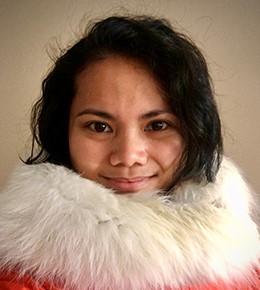
“Being highly visible made me highly accountable and it pushed me to hold my responsibilities with care and keep them grounded in the wellness of the community,” Cates Bayabay says.
There are many distinct features of nursing practice in sparsely populated areas, and being highly visible was the one I struggled to cope with the most.
Having only lived and worked in dense urban areas previously, the initial months of working in remote, rural, northern communities was filled with discomfort, primarily due to the lack of anonymity. Maintaining personal and professional boundaries became a difficult reality.
I was ill-prepared to navigate the complex and dynamic nurse-patient relationship in remote, northern communities. In the urban setting, the nurse-patient relationship was well-demarcated for me, and it was clear in which lane I needed to stay. There was very little chance of intersection and overlap outside of work anyway because I was concealed behind a large crowd of urban dwellers.
But that was not the reality here.
The reality was that at times a colleague would be a patient one moment (e.g., following up on their bloodwork) then a colleague again the next, as we worked on the treatment and management of another patient. I would interact with patients and families outside work every day: at the grocery stores, at the post office, at community events. I would be treating a man’s shoulder pain one morning, then asking the same man for treatment of my water tank at home that afternoon. Today I would be caring for a mother’s child and tomorrow that same mother would help me at the airport when I needed to send lab specimens away.
There are myriad ways nurses and patients interact in these remote, northern communities that make it almost impossible to maintain a well-demarcated line between personal and professional boundaries.
Tensions in being highly visible
The struggle to find balance between work and life was cognitively exhausting and socially isolating. For the first few months, I was overwhelmed with this degree of visibility and being known for my profession first before my name. The lack of anonymity led me to seek a level of privacy that I found only facilitated feelings of isolation.
When I couldn’t cope with the blurred boundaries, I resorted to solitude. Though beneficial at times, this solitude limited my awareness of the community. It also constrained my integration into the community because hiding away prevented any relationship-building from happening.
When I eventually opened up to embracing this visibility and lack of anonymity — when I finally embraced being the nurse — I felt the community embraced me in return.
I started volunteering as a firefighter medic and would go on emergency calls, fire drills, and fundraising events hosted by the fire department. By being present during these times, I got to see a lot more of the community, and the community got to see more of me.
Now, a decade in, I am realizing the power of being visible, of being known as the nurse. As an “outsider” to the community and without any familial connections, I came to understand that having a role (the nurse) in the community helped establish my function — to nurse. I have found that having a function or role helped the community know my purpose. And, in my experience, once people learned what my purpose was in the community, they began to open up and I started hearing their stories.
Of course, with this power comes responsibility and with this visibility comes accountability. I have a responsibility to hold the stories given to me as sacred and use them to care for people, not gossip about them. I have a responsibility to listen and understand, not correct. When I had unintentionally misused stories, because my own biases got in the way, the community held me accountable. Being highly visible made me highly accountable and it pushed me to hold my responsibilities with care and keep them grounded in the wellness of the community.
A framework is a friend
What has further helped me understand and embrace this high visibility inherent to practising in remote, northern communities is the Knowing the Rural Community: A Framework for Nursing Practice in Rural and Remote Canada, developed by the Canadian Association for Rural and Remote Nursing (CARRN, 2020). This framework is a comprehensive guide to working in rural and remote settings. It recognizes that “being visible and known in the community” (p. 13) is one of the attributes of rural and remote nursing. The framework also acknowledges the “blurring of professional boundaries” (p. 13) that occurs at the workplace.
The CARRN framework has helped give language to a distinct feature of my nursing practice I previously struggled with. It also provided reassurance that I was not the only nurse who has felt the tensions between the boundaries, the struggles of being known, and the weight of the rural/remote nurse’s responsibility in caring for the community. The framework became a friend that provided reassurance and a reference when I needed to describe what “type of nursing” or “specialty” I practised. Still now, the framework continues to support me when speaking about the unique attributes of nursing practice in the rural, northern and remote settings.
Nursing practice in rural and remote settings is distinct. Rural/remote nurses are inherently visible to the community, and with this visibility comes power and accountability. I encourage rural/remote nurses to embrace this visibility and hold their power with care. Because when I finally embraced this visibility, the community saw more than a nurse — they saw me as a person.
Cates Bayabay, RN, BScN, MHLP, CHE, works as the director of health programs in Nunavut and is the president-elect for the Canadian Association for Rural and Remote Nursing.
#opinions
#community-health
#indigenous
#nurse-patient-relationship
#patient-experience
#specialty-nursing