https://www.infirmiere-canadienne.com/blogs/ic-contenu/2026/09/21/de-la-clinique-a-la-salle-de-classe
‘For nurses considering teaching PSW students, my advice is simple: do it.’
By Hamsha Mahalingasivam
September 21, 2026
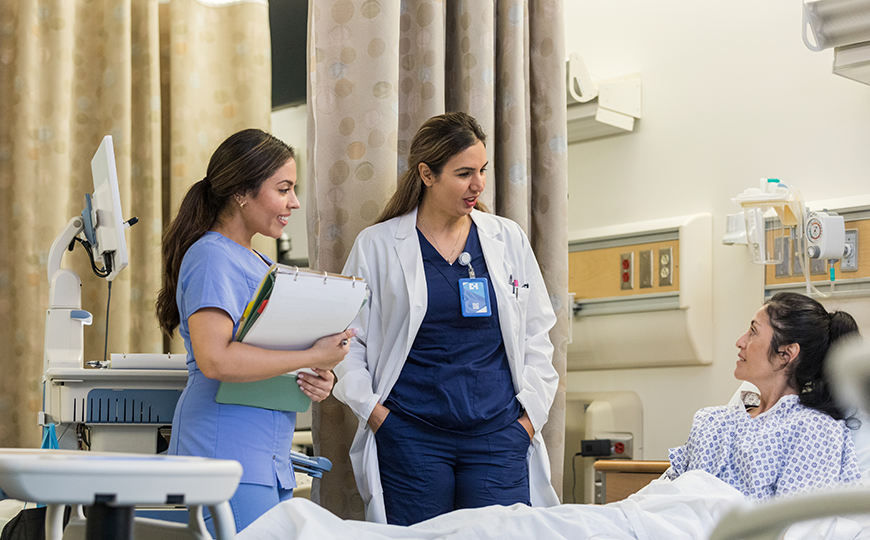 istockphoto.com/SDI Productions
Supporting PSW education is not a departure from nursing practice — it is an extension of it.
When I first transitioned from clinical nursing to health-care education more than a decade ago, it was to teach personal support worker (PSW) students.
 Courtesy of Hamsha Mahalingasivam
“PSWs have long been essential partners in many care settings. As nurses, we have a responsibility to ensure that PSWs are educated to high standards of safety, ethics, and competence, because we work alongside them caring for the same patients,” Hamsha Mahalingasivam says.
For nurses considering teaching PSW students, my advice is simple: do it. If you value these critical members of the care team, enjoy teaching, and want to use your nursing voice to advocate for excellent patient care, a role in PSW education may be a meaningful next step.
Where it all began
My decision to enter PSW education grew out of a bedside experience that reshaped how I understood the PSW role and the responsibility nurses have to support it.
At the time, I was working on a highly acute medical and radiation oncology unit. Teaching had never been part of my career plan, and I did not expect to leave bedside nursing. But one experience challenged my assumptions and prompted me to think differently about how nurses can influence care beyond their immediate clinical roles. Looking back, it marked the beginning of a new professional direction.
The PSW who influenced that redirect was hired by the family of a patient who was actively dying from cancer. She was brought in to provide one-to-one support overnight, as our unit was short-staffed and the family understood that nursing staff could not remain at the bedside continuously. I was caring for several other patients and her presence ensured that the patient received focused, compassionate care.
She came to us from an agency, hired by the family who had already begun grieving their loss. She walked in for that first night shift poised, smart, and oh-so knowledgeable. As we cared for the same patient throughout the week, she began to speak to me about a profession that often went unnoticed, unappreciated, and invisible, but that was critical to patient care. Our conversations made me aware of a previously unrecognized need for stronger PSW support in education.
She spoke candidly about her skills, the lack of support she encountered during her training, and the condescension she had experienced in some care settings. She emphasized the need for comprehensive education and for stronger advocacy for PSWs within the health-care system. In particular, she spoke about the role nurses could play in supporting PSW education and professional development.
That last comment stopped me mid-priming the IV lines. I asked her to elaborate how nurses can help. She shared with me the unique skills and position nurses had to teach PSW students and how we could work together to bridge the gap in patient support.
The importance of nurses understanding PSWs
Her perspective resonated. Nurses and PSWs work very closely together. Nurses can delegate tasks within the PSW’s scope of practice, and nurses can monitor and supervise. The care tasks are often the same.
I saw PSWs on other units all the time, but had never worked closely with one before, so did not know the depth of their role. Something shifted. Hearing her describe the demands of her role underscored how important it is for nurses to intimately understand PSWs’ scope of practice and intentionally support it.
This conversation was the stimulus that led me to research teaching roles in PSW education, credentials and qualifications for teaching in this health-care scope, and how to advocate for PSWs. Ultimately, I landed a PSW Instructor role at a wonderful private college that recognized the value and education of the PSW profession.
Decades later, now as the program chair of the PSW program, I spend much of my time creating PSW curricula and mentoring, onboarding, and inspiring other nurses who made that same leap to teach PSW students. I’ve found that nursing provides the unique vantage point required to support and advocate for PSW education.
How we build our curriculum
My framework for supporting nurse hires as they transition into the PSW instructor role focuses on connecting the curriculum to clinical wisdom. Using Ontario’s PSW standards, we pair dynamic and research-based instruction with the nurse’s own clinical experiences to give theory its practical purpose. We talk about real PSW work in the field and collaborate with our PSW communities and associations to help nurses understand the realities of PSW work.
One of the most common hurdles I see in nurses making the transition to PSW education is the shift in both perspective and urgency. On the unit, nurses are often focused on immediate patient care tasks, managing high critical care loads, and working in fast-paced and high-acuity settings. In the classroom, we are focused on deep understanding of PSW work, ensuring competency and overall long-term growth of students entering a valuable profession.
PSWs have long been essential partners in many care settings. As nurses, we have a responsibility to ensure that PSWs are educated to high standards of safety, ethics, and competence, because we work alongside them caring for the same patients. Supporting PSW education is not a departure from nursing practice — it is an extension of it.
Sadly, the PSW who changed my nursing journey passed away in 2019. I will always be grateful to her for speaking the truth about PSW work and inspiring me to use my nursing voice to advocate, teach, and support PSW work in our community.
Hamsha Mahalingasivam, RN, HICA-CCHIM, is the program chair of the personal support worker program and the medical office administrator program at the Anderson College of Health, Business and Technology.
#career
#nursing-roles
#nursing-education
#professional-development
#interprofessional-collaboration
#workforce-planning