https://www.infirmiere-canadienne.com/blogs/ic-contenu/2026/09/14/parcours-dune-infirmiere-realisation-de-soi
‘I realized that the question was not whether I was ready for doctoral study, but whether I was prepared to stop holding myself back’
By Eunice K. Assem-Erhaze
September 14, 2026
 istockphoto.com/andresr
Many Canadian nurses face this same balancing act, juggling professional responsibilities with academic aspirations. It is a testament to the resilience and dedication that define our profession.
Growing up in a working-class household in Accra, Ghana, I never imagined I would one day pursue a doctoral degree in nursing in Canada. The path has been long and winding, crossing continents and cultures, shaped by the tension between tradition and aspiration.
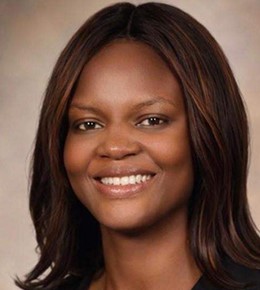 Courtesy of Eunice K. Assem-Erhaze
“Completing my PhD is not the end of the road. It marks the beginning of a new era in leadership and service,” Eunice K. Assem-Erhaze says.
This is my story, and in many ways, it reflects the journey of many nurses in Canada who navigate personal change alongside professional development. I share my story in the hope that it resonates with other nurses across Canada who may feel a similar sense of calling.
Where my journey began
As a girl in Ghana, educational ambition often clashed with social expectations. The message for women was clear: marriage and motherhood came first, and education, if pursued at all, was secondary. Yet my mother, despite her limited formal schooling, supported my desire to learn. She gave me space to dream.
Even though I excelled in school, I often felt like I didn’t belong, neither among classmates with more privilege nor among neighbourhood peers who viewed education as a luxury. I lived in a liminal space that many immigrant nurses in Canada may recognize, where your social world doesn’t quite match your inner drive. Still, something inside me whispered: You are meant for more.
My nursing journey began in Ireland, where I earned my first degree. I clearly remember those early days of lectures, hospital placements, and late nights at the library. It wasn’t just professional training; it was a personal awakening. A pivotal moment occurred when one of my professors, in her final year of teaching, encouraged me to consider doctoral studies. At the time, it felt like she was speaking to someone else. I was barely managing, working multiple jobs, navigating a foreign system, and carrying the weight of expectations. The idea of a PhD felt both distant and surreal.
New beginnings in Canada
Upon arriving in Canada, I immersed myself in the clinical world of perioperative nursing. For over two decades, I found purpose in the operating room, guiding patients through some of their most vulnerable moments. Eventually, I began teaching clinical courses and completed graduate studies in nursing and education.
But something still tugged at me. The more I taught, the more I realized I wanted to understand nursing on a deeper level. I didn’t just want to pass on knowledge; I wanted to contribute to it. I saw my dual identity as a nurse-educator as a strength. I maintained a balance between academia and clinical practice, often working full-time while pursuing part-time studies.
Many Canadian nurses face this same balancing act, juggling professional responsibilities with academic aspirations. It is a testament to the resilience and dedication that define our profession.
Answering the call
Like many Canadian nurses juggling work, family, and community responsibilities, I postponed my PhD aspirations. I told myself I needed more experience, more stability, and more certainty. But the call never went away. It wasn’t until the height of the COVID-19 pandemic that I took the leap.
Surrounded by global uncertainty, I decided to pursue what had long felt like an impossible dream. I enrolled in a doctoral program with a mix of fear, hope, and determination. The isolation of lockdowns created space for introspection and I found myself reflecting deeply on my purpose. I realized that the question was not whether I was ready for doctoral study, but whether I was prepared to stop holding myself back.
With each course I completed, I felt more aligned with my calling. The coursework challenged my assumptions, expanded my thinking, and strengthened my sense of direction. I began to connect with Canadian scholars who are doing transformative work in nursing, many of whom are also women of colour, immigrants, and first-generation academics. Their stories empowered me.
Trials, transformations, and thresholds
Doctoral studies are challenging, not just intellectually, but also emotionally and spiritually. I struggled with questions of identity. Am I still a nurse if I am no longer at the bedside? Can I be both a caregiver and a scholar? These are common reflections among nurse-scholars in Canada. Nursing is rooted in action, presence, and empathy, while academia can often feel abstract.
Yet I have learned that research grounded in lived experience is powerful. My clinical past is not a detour; it is the foundation upon which I build my scholarly identity. I began embracing mixed-methods research, recognizing how reflexive inquiry and practice-based knowledge can drive meaningful change. Scholars such as Freire and Mezirow have profoundly influenced my thinking. Their work affirmed that education is not merely about acquiring knowledge; it is about transformation.
As I progressed in my studies, I encountered moments of self-doubt. Writing academic papers, navigating research ethics, and defending my methodology all pushed me beyond my comfort zone. However, I came to understand that discomfort is a natural part of the growth process. The doctoral journey is not a straight line. It is a spiral, and we return to the same questions with deeper insight each time.
Mentors and meaning
Throughout my journey, mentorship has been a lifeline. In Canada’s academic and health-care environments, support networks can make all the difference. I have been fortunate to find professors, colleagues, and fellow students who have championed me, challenged me, and believed in me.
To nurses considering advanced education, I say: seek out mentors. They do not have to look like you or share your background, but they should believe in your potential. And when the time comes, be that mentor for someone else. Canadian nurse leaders often serve as powerful examples of how to blend scholarship and practice. I have drawn strength from their stories, from how they navigated adversity, persisted through challenges, and used their voice to advocate for change. Their paths remind me that our work, while personal, contributes to a collective movement.
Mentorship also helped me refine my voice. Through peer review, faculty feedback, and countless revisions, I grew more confident in my ability to write and think as a scholar. It is one thing to know you have something to say; it is another to learn how to say it well. That is the power of academic mentorship.
The power of reflection
Nursing teaches us to be reflective practitioners. I have come to see that this skill is also what makes us influential researchers. My own research is deeply personal, rooted in my lived experience as a Black woman, immigrant, and working-class professional.
I explore issues of equity, education, and inclusion because they are part of who I am. In Canadian nursing, we often talk about bringing our whole selves to practice. I now bring my entire self to research as well. I am not just a student in a program; I am the sum of every patient I have cared for, every challenge I have faced, and every mentor who saw in me what I could not yet see in myself.
Reflection is not just about looking back; it's also about looking forward. It is about imagining the nurse I want to become and working toward that vision with intention. As I progress through my PhD, I remain committed to creating research that is impactful, accessible, and rooted in the values of nursing.
My PhD marks a new beginning
Now, in the midst of doctoral studies, I continue to grapple with questions of identity. Can I be a nurse, an educator, and a researcher all at the same time? The answer is yes. The Canadian health-care system needs us to be all of these things and more.
As I grow into this role, I feel increasingly equipped to give back to students, patients, and a profession that has given me so much. I want to help redesign nursing education to be more inclusive, more supportive, and more reflective of our diverse population.
Completing my PhD is not the end of the road. It marks the beginning of a new era in leadership and service. My journey is not just about me. It is about every nurse who has ever felt unseen, underestimated, or unsure. It is about showing that we all belong in spaces of leadership, scholarship, and influence.
Conclusion
This is my journey that I wanted to share, not because I have all the answers, but because I dared to ask the questions. If you’re considering doctoral study, know this: it is not about status or titles. It’s about finding your voice, shaping your future, and transforming your practice. It’s about becoming. And it’s a journey worth taking.
Acknowledgement
I extend my sincere gratitude to Drs. Wanda Chernomas and Nicole Harder for their mentorship and thoughtful guidance throughout my doctoral journey. Their encouragement has helped shape my growth as a nurse, educator, and emerging scholar.
Eunice K. Assem-Erhaze, RN, BSN, MN, MEd, FFNMRCSI, CPN(C), CCSNE, CCNE, CCCI, works in Yorkton Regional Hospital, Saskatchewan, as a registered nurse and is a doctoral student in nursing at the University of Manitoba.
#opinions
#nursing-education
#career-stage
#leadership
#equity-social-justice
#nursing-research
#professional-development