https://www.infirmiere-canadienne.com/blogs/ic-contenu/2026/08/24/effet-systeme-transfert-des-patients-pneumatique
Quality improvement initiative finds reduced workplace musculoskeletal injuries and improved staff satisfaction in an inpatient setting
By Noorin Darvesh
August 24, 2026
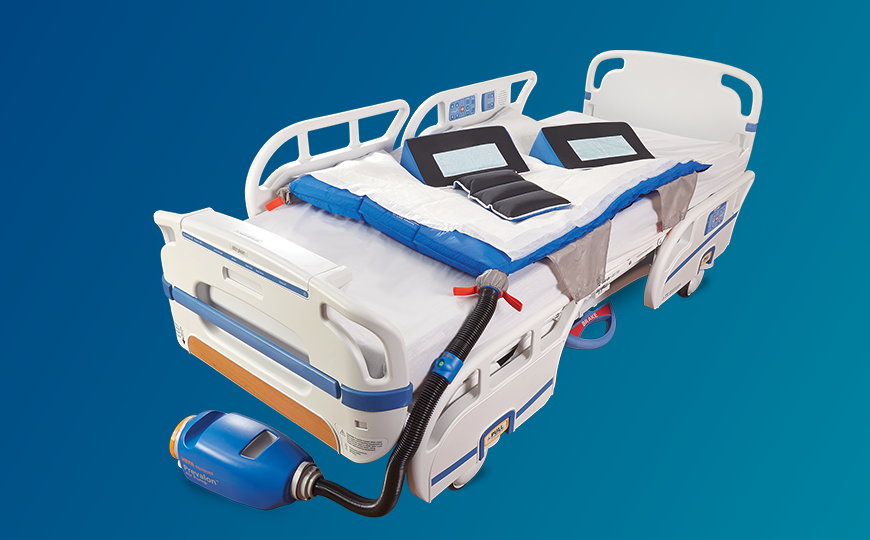 The author’s quality improvement initiative highlights that an air-powered turning system is associated with reduced workplace musculoskeletal injuries and improved staff satisfaction in an inpatient setting. Greater accessibility to safer patient handling interventions may reduce staff injuries.
Takeaway messages
- An air-powered turning system was associated with a reduction in musculoskeletal injuries in an adult inpatient setting.
- Staff reported less pain, as patient handling was made easier.
- Wider adoption of this system could reduce workplace absenteeism and injury-related claims, leading to a healthier and more sustainable workforce.
Nurses and health-care aides face significant ergonomic risks related to patient handling. Work-related musculoskeletal injuries, including back and neck pain, sprains, and injuries to the extremities, are common due to repetitive lifting and patient repositioning (Khairallah et al., 2024; Choi & Brings, 2016). An air-powered turning system reduces physical strain by using a cushion of air to assist with in-bed repositioning, boosting, and lateral transfers, requiring less force and friction than standard patient-handling practices (Fray & Davis, 2024). This system is part of a comprehensive pressure injury prevention strategy that also includes effective moisture management and proper patient off-loading.
On our adult inpatient unit, standard repositioning practices are often associated with self-reported musculoskeletal injuries among staff. As hospitalized patients are also at risk of developing pressure injuries, this highlights the need for an intervention that both prevents staff injuries and reduces the risk of pressure injuries.
This quality improvement project aimed to evaluate the impact of an air-powered turning system on workplace injuries and staff satisfaction in an adult inpatient setting between May and November 2024.
Methods
This project was completed on a 52-bed medical/neurology inpatient unit in a large urban centre, and evaluations were completed using pre- and post-intervention comparison methods. At the time of the project, the unit employed 119 nurses and health-care aides, with an average patient length of stay of 13.5 days. Staff injury data were collected via an anonymous electronic survey (REDCap) in May 2024 (n = 46, pre-implementation) and August 2024 (n = 30, post-implementation).
Patient eligibility for the air-powered turning system was determined by developing clinical criteria based on best-practice guidelines that identified patients at risk of developing a pressure injury:
Eligibility criteria
A patient is eligible if they meet at least one of the following:
- Ongoing difficulty repositioning or boosting independently
- Requires total lift or two-person assist
- Paralysis (paraplegia, quadriplegia, stroke)
- Current Braden Scale score of 2 or less in any of the following Braden risk factors: sensory perception, moisture, activity, mobility, and friction and shear (nutrition excluded)
- Active pressure injury or history of pressure injury
- Palliative status requiring comfort measures for turning and positioning
- Bedridden
- Bariatric
Exclusions
A patient is ineligible if they meet at least one of the following:
- Spinal precautions
- Length of stay less than 24 hours
Three audits were conducted before implementation using our clinical criteria tool to assess the number of at-risk patients on the unit at any given time.
Implementation
Nearly 100 staff members received training on the proper usage of the air-powered turning system before its implementation on May 27, 2024.
Results
Pre-implementation
Results from the three pre-implementation audits showed that anywhere from 20% to 50% of patients met the criteria for system use at any given time. Aggregate data from three audits, assessing 149 patients, revealed that:
- 50% (n = 75) did not have appropriate moisture management
- 97% (n = 145) did not have their heels off-loaded
- 99% (n = 148) did not have their sacrum off-loaded
According to informal verbal staff feedback, it was determined that staff lacked the necessary tools, education, and training to effectively manage patients requiring pressure injury prevention strategies.
Key numerical findings from the pre-implementation anonymous electronic staff injury survey included:
- 21.7% (n = 10) of staff reported frequent injuries related to patient handling
- 41.3% (n = 19) of staff reported occasional injuries
Staff were invited to provide additional information in the survey. Twenty-nine of the 46 respondents chose to provide written feedback. Quotes from the feedback include:
- “I have back pain and shoulder pain from lifting and moving patients.”
- “I experience some discomfort, pain, and fatigue after moving patients.”
- “Turning patients who are resistive to turning and changing causes strain on my arms and lower back.”
Post-implementation
From June to November 2024, 711 patients were audited for the applicability of the system. An air-powered turning system was applied to approximately 192 patients (27%).
Following system implementation, compliance audits and pressure injury prevention audits were conducted, revealing variations in system usage on the unit. To accurately assess the impact of the system on staff outcomes, the correct usage of the system was essential. Targeted education through posters, email reminders, and just-in-time staff feedback was implemented to support the fidelity of the project.
A staff injury survey was conducted two months post-implementation, yielding a response rate of 25.2% (n = 30) staff members, who provided both quantitative and qualitative feedback.
Staff injury survey data (Figure 1) showed that:
- Frequent injuries (self-reported) decreased from 22.2% (10/46) to 0% (0/30).
- Occasional injuries (self-reported) decreased from 42.2% (19/46) to 10.0% (3/30), representing a 76% overall reduction in reported injuries based on survey percentages.
- Staff reporting no injuries increased from 37.8% (17/46) to 90% (27/30).
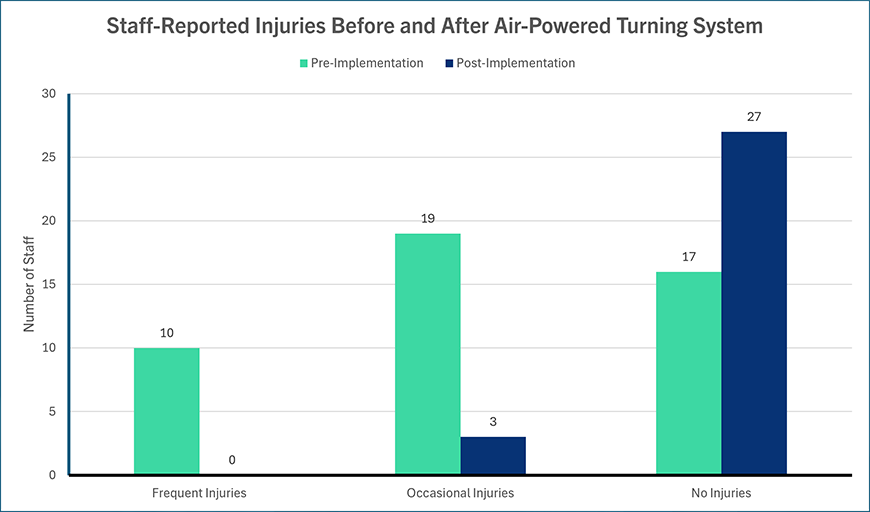 Figure 1. Staff reporting both frequent and occasional injuries decreased post-implementation, while the proportion of staff reporting no injuries increased.
Twelve of the 30 respondents provided written feedback. Quotes from the feedback included:
- “The system is very useful to boost or transfer patients. I had mild back pain and sore wrists before. I have not had these symptoms since the system was introduced.”
- “It really helps our body mechanics and saves our backs.”
- “I had a previous injury in my shoulder that continuously caused me pain due to the repetitive movements during work. This pain even made me take a day off work. For the last 2-3 months, I have not experienced pain because boosting patients in bed got so much easier.”
- “In my opinion, the system reduces injuries for both patients and workers; it is a great investment for the future.”
- “The system made patient and health-care workers’ work easy and convenient. It reduces sprains, strains, or any kind of injuries to both patients and health-care workers!”
Conclusion
This quality improvement initiative highlights that an air-powered turning system is associated with reduced workplace musculoskeletal injuries and improved staff satisfaction in an inpatient setting. Greater accessibility to safer patient handling interventions may reduce staff injuries. The findings suggest the potential for scalability across multiple units and departments, as patients on other units likely share a similar proportion of care needs and risk factors. Improved workplace safety could strengthen staff retention, reduce absenteeism, lower workplace injury-related costs, and enhance overall job satisfaction.
Future studies should further evaluate outcomes — including workplace injury reports, sick calls, and workers compensation board claims — to support a safer and more sustainable health-care workforce.
Contributors
Gregory Heather, Aimee DiBella, Andrea Cole-Haskayne, Melissa Pimenta, Kiran Pohar Manhas, Caitlin Hurd, Travis Toman, Glenda Moore.
References
Choi, S. D., & Brings, K. (2016). Work-related musculoskeletal risks associated with nurses and nursing assistants handling overweight and obese patients: A literature review. Work, 53(2), 439–448. https://doi.org/10.3233/WOR-152222
Fray, M., & Davis, K. G. (2024). Effectiveness of safe patient handling equipment and techniques: A review of biomechanical studies. Human Factors, 66(10), 2283–2322. https://doi.org/10.1177/00187208231211842
Khairallah, G. M., Mowafi, H., Al-Hajj, S., Brackett, A., & Sakr, C. J. (2024). Barriers and facilitators for the use of patient lifts by healthcare workers: A scoping review. International Journal of Environmental Research and Public Health, 21(12), 1659. https://doi.org/10.3390/ijerph21121659
Noorin Darvesh, MN, BScN, RN, CNN(C), is an operational clinical informatics lead based in Calgary, Alberta. At the time of writing, she was a clinical nurse educator with Alberta Health Services at South Health Campus.
#practice
#quality-improvement
#workplace-safety
#nurses-health-and-well-being
#technology
#patient-safety